
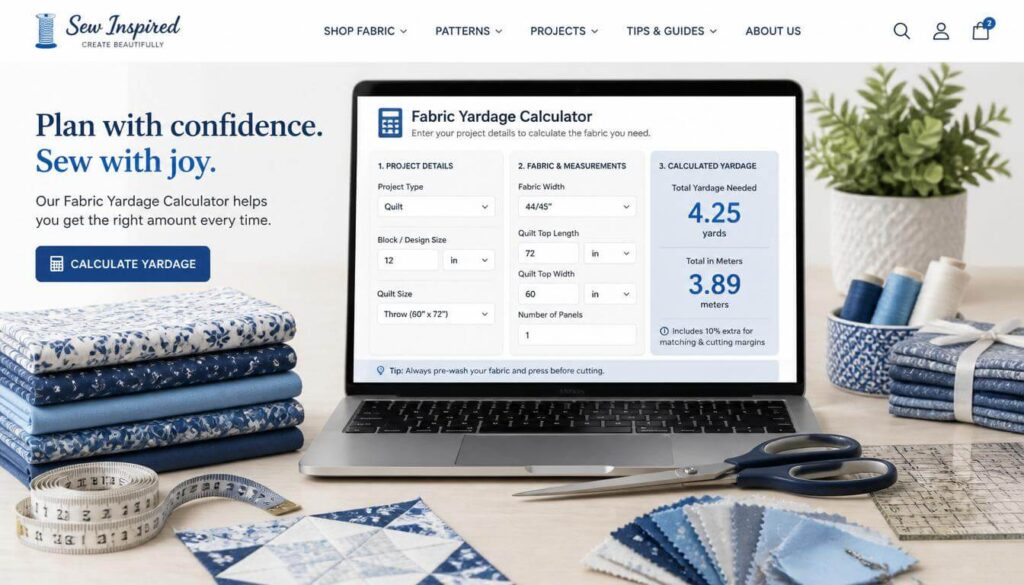
Planning a sewing project starts with one simple question:
How much fabric do I need?
Buying too much fabric wastes money, while buying too little often means an extra trip to the fabric store—or worse, running out of matching fabric halfway through your project.
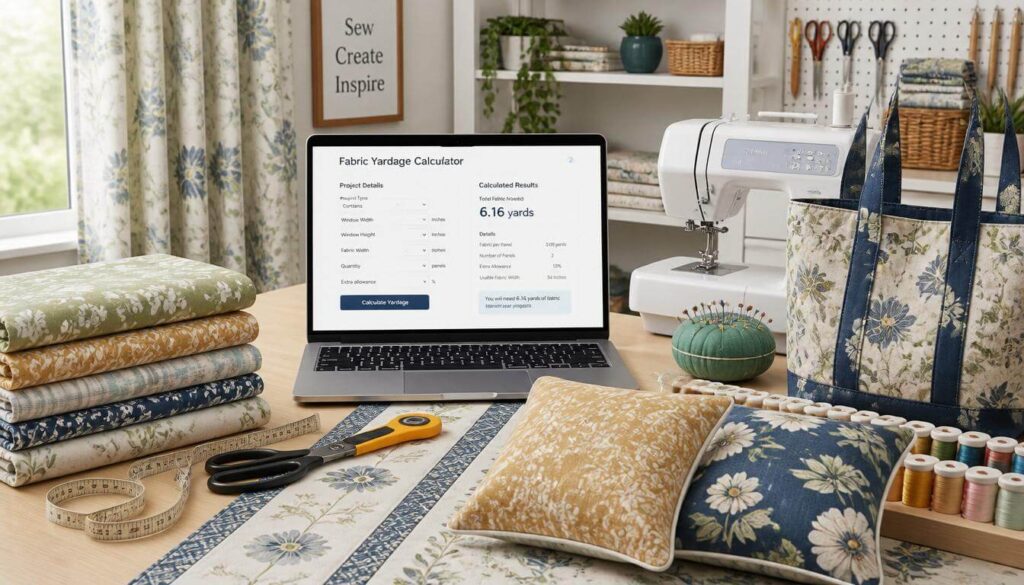
That’s where our Fabric Calculator helps.
The SewSmartHub Fabric Yardage Calculator is a free online tool designed to estimate fabric requirements for a wide range of sewing projects. Whether you’re making a dress, quilting a blanket, sewing curtains, or creating home décor, it calculates the fabric you need based on your measurements, project type, and fabric width—without the guesswork.
Instead of relying on generic fabric charts or doing manual calculations, you can enter your project details and receive an instant estimate in both yards and meters.
Use the Fabric Calculator above, then continue reading this guide to learn how to get the most accurate fabric estimate for your project.
- How Our Fabric Calculator Estimates Fabric Yardage
- How to Use the Clothing Calculator
- Clothing Fabric Examples
- How to Use the Quilting Calculator
- Quilting Examples
- Why Quilt Backing Is Calculated Separately
- How to Use the General Yardage Calculator
- General Project Examples
- 1. Choosing the Wrong Fabric Width
- 2. Forgetting Seam Allowances
- 3. Ignoring Fabric Shrinkage
- 4. Overlooking Directional Prints
- 5. Forgetting Pattern Matching
- 6. Estimating Quilt Backing Incorrectly
- 7. Relying Only on Fabric Charts
- Conclusion
- Ready to Start Your Project?
How Our Fabric Calculator Estimates Fabric Yardage
Unlike basic online calculators that rely on a single formula, the SewSmartHub Fabric Calculator estimates fabric requirements using multiple project-specific factors.
Depending on the calculation mode you choose, it considers:
- Fabric width
- Project dimensions
- Garment type
- Quilt size and backing width
- Number of fabric pieces
- Optional seam allowance
- Waste and shrinkage allowance
The result is a more practical estimate that’s suitable for most everyday sewing projects.
Important: Every sewing pattern is different. While our calculator provides reliable estimates for planning and fabric shopping, always check your commercial sewing pattern’s recommended yardage before cutting expensive or specialty fabrics.
Why Use a Fabric Calculator Instead of Estimating by Hand?
Estimating fabric manually is one of the most common reasons sewists buy the wrong amount of fabric.
Different fabric widths, seam allowances, directional prints, and project layouts can quickly turn a simple calculation into a frustrating guessing game. Even a small mistake can leave you short of fabric—or with unnecessary leftovers.
A fabric yardage calculator simplifies the entire process by doing the calculations for you. Instead of measuring, converting units, and estimating layouts yourself, you simply enter your project details and receive an accurate fabric estimate in seconds.
Whether you’re sewing clothing, quilting, or making home décor items, using a fabric calculator helps you:
- Save money by avoiding overbuying.
- Reduce fabric waste.
- Estimate yardage more accurately.
- Compare different fabric widths instantly.
- Plan projects with greater confidence.
Fabric Width Chart
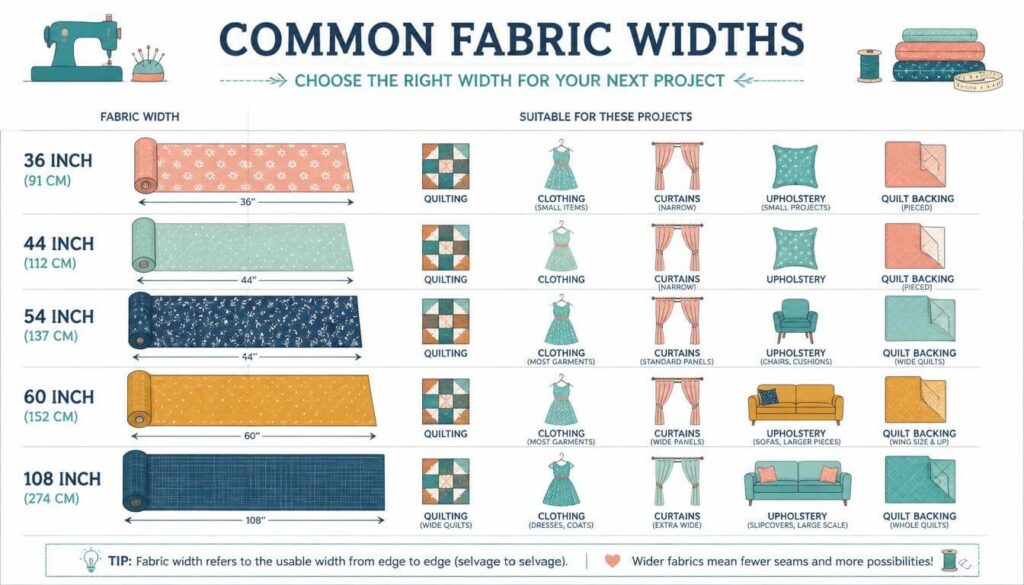
Fabric width plays a major role in calculating fabric yardage. Choosing the wrong width can significantly affect your estimate because wider fabrics fit more pattern pieces across the fabric, reducing the total yardage required.
Use the chart below as a quick reference before entering your fabric width into the calculator.
| Fabric Width | Common Uses |
| 36 in (91 cm) | Lightweight fabrics, linings, children’s projects, craft fabrics |
| 44 in (112 cm) | Quilting cotton, patchwork, craft projects |
| 54 in (137 cm) | Dresses, shirts, skirts, trousers, general apparel |
| 60 in (152 cm) | Upholstery, curtains, jackets, home décor |
| 108 in (274 cm) | Quilt backing, extra-wide home décor fabrics |
Tip: Always select the same fabric width in the calculator that matches the fabric bolt you’re buying. Even a small width difference can noticeably change the required yardage.
Fabric Calculator for Clothing: Estimate Fabric for Dresses, Shirts, Pants & More
Sewing clothes is one of the most common reasons people search for a fabric calculator. Every garment requires a different amount of fabric depending on its design, measurements, fabric width, and style.
A loose maxi dress, for example, usually needs more fabric than a fitted skirt, while long sleeves, collars, pleats, and pockets can all increase the required yardage.
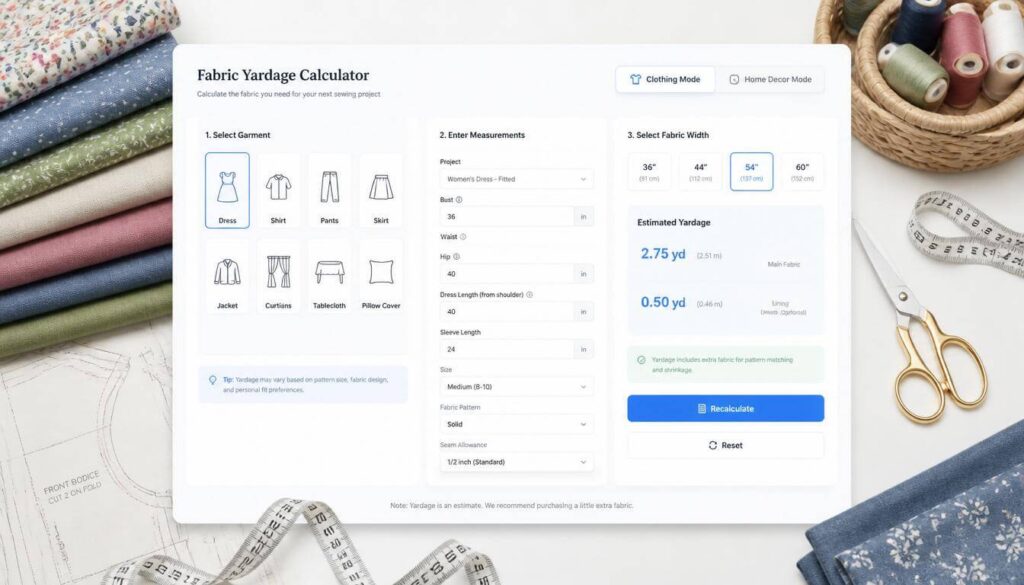
Instead of relying on generic yardage charts, our Fabric Yardage Calculator estimates fabric requirements using the measurements you provide, making it easier to plan your sewing project with confidence.
How to Use the Clothing Calculator
Follow these simple steps:
- Open the Garment tab in the calculator.
- Select your garment type (Dress, Shirt, Pants, Skirt, Jacket, Curtains, Tablecloth, or Pillow Cover).
- Choose your fabric width (36″, 44″, 54″, or 60″).
- Enter the required body or project measurements.
- Enable the 15% allowance option if you want extra fabric for seams, hems, matching prints, or minor cutting mistakes.
- Click Calculate to instantly see the estimated fabric requirement in yards and meters.
Tip: If you’re using patterned or directional fabric, buying a little extra fabric is always recommended to allow for pattern matching.
Clothing Fabric Examples
Example 1 – Dress
| Measurement | Value |
| Bust | 38 in |
| Dress Length | 45 in |
| Fabric Width | 44 in |
| Estimated Fabric | Approx. 3.5 yards |
Example 2 – Shirt
| Measurement | Value |
| Chest | 40 in |
| Shirt Length | 30 in |
| Fabric Width | 54 in |
| Estimated Fabric | Approx. 2 yards |
Example 3 – Skirt
| Measurement | Value |
| Waist | 30 in |
| Skirt Length | 28 in |
| Fabric Width | 44 in |
| Estimated Fabric | Approx. 1.75 yards |
Note: These examples are provided for demonstration purposes. Actual fabric requirements may vary depending on the sewing pattern, sleeve style, fabric direction, and design details.
Fabric Calculator for Quilting Projects
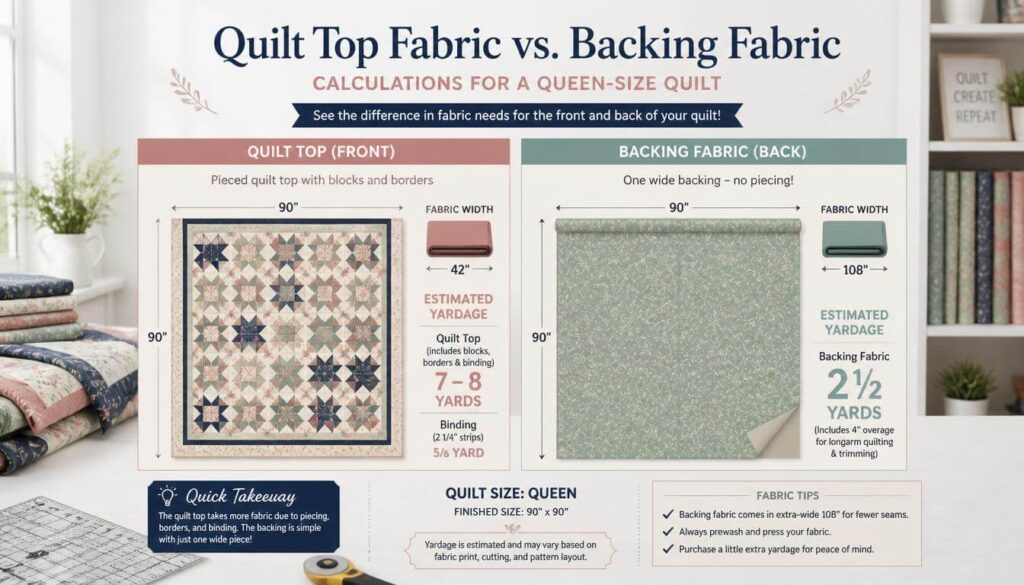
Quilting projects require more than a simple fabric estimate. In most cases, you need to calculate fabric separately for the quilt top, individual fabric colors, borders, binding, and backing. Because these measurements are different, estimating quilt fabric manually often leads to mistakes.
Our Quilt Fabric Calculator simplifies this process by calculating each section individually, helping you purchase the right amount of fabric without unnecessary waste.
Whether you’re making a baby quilt, lap quilt, throw quilt, or queen-size quilt, the calculator provides estimates based on your chosen dimensions and fabric width.
How to Use the Quilting Calculator
- Open the Quilting tab.
- Enter your quilt width and length.
- Select your preferred block size.
- Enter the number of fabric colors.
- Choose the fabric width for both the quilt top and backing.
- Click Calculate to view:
- Total quilt blocks
- Fabric required for each color
- Backing fabric estimate
Pro Tip: Wide 108-inch backing fabric often reduces the amount of piecing required, making quilt assembly quicker and easier.
Quilting Examples
Example 1 – Queen Size Quilt
| Measurement | Value |
| Quilt Size | 90 × 90 in |
| Backing Width | 108 in |
| Estimated Backing | Approx. 8 yards |
Example 2 – Lap Quilt
| Measurement | Value |
| Quilt Size | 60 × 60 in |
| Fabric Width | 44 in |
| Colors | 3 |
| Calculator Output | Individual yardage for each fabric color |
Why Quilt Backing Is Calculated Separately
One of the most common quilting mistakes is estimating the quilt backing using the same calculations as the quilt top.
In reality, backing fabric is often available in wider widths, such as 108 inches, which changes the total yardage required. Calculating the backing separately helps reduce fabric waste and eliminates unnecessary seams.
Our calculator automatically treats quilt backing as a separate calculation, providing a more accurate estimate for quilting projects.
Fabric Calculator for General Sewing Projects
Not every sewing project involves clothing or quilting. Many DIY and home décor projects require accurate fabric estimates too, especially when you’re cutting multiple identical pieces.
Whether you’re sewing curtains, cushion covers, pillowcases, table runners, tablecloths, tote bags, or simple craft projects, our Fabric Calculator helps you estimate the right amount of fabric before you start cutting.
Instead of manually calculating rows, columns, and leftover fabric, the calculator automatically determines how efficiently your pieces fit across the selected fabric width.
How to Use the General Yardage Calculator
Using the General Yardage mode is quick and straightforward:
- Open the General Yardage tab.
- Enter the width and length of each fabric piece.
- Enter the number of pieces you need.
- Select the fabric width you’re purchasing.
- Enable the optional 10% waste allowance if you’d like extra fabric for trimming, shrinkage, or small cutting errors.
- Click Calculate to instantly see:
- Pieces per row
- Number of rows required
- Total fabric needed in yards and meters
This mode is ideal for projects that use multiple rectangular pieces and helps reduce fabric waste by making better use of the available fabric width.
General Project Examples
Example 1 – Cushion Covers
| Project | Value |
| Piece Size | 18 × 18 in |
| Quantity | 4 |
| Fabric Width | 44 in |
| Estimated Fabric | Approx. 1.5 yards |
Example 2 – Curtains
| Project | Value |
| Curtain Width | 52 in |
| Curtain Length | 84 in |
| Number of Panels | 2 |
| Fabric Width | 60 in |
| Estimated Fabric | Approx. 5 yards |
Example 3 – Table Runner
| Project | Value |
| Size | 16 × 72 in |
| Quantity | 1 |
| Fabric Width | 44 in |
| Estimated Fabric | Approx. 2 yards |
Note: Fabric estimates may vary depending on pattern matching, directional prints, hems, and any additional design features.
Common Fabric Estimation Mistakes to Avoid
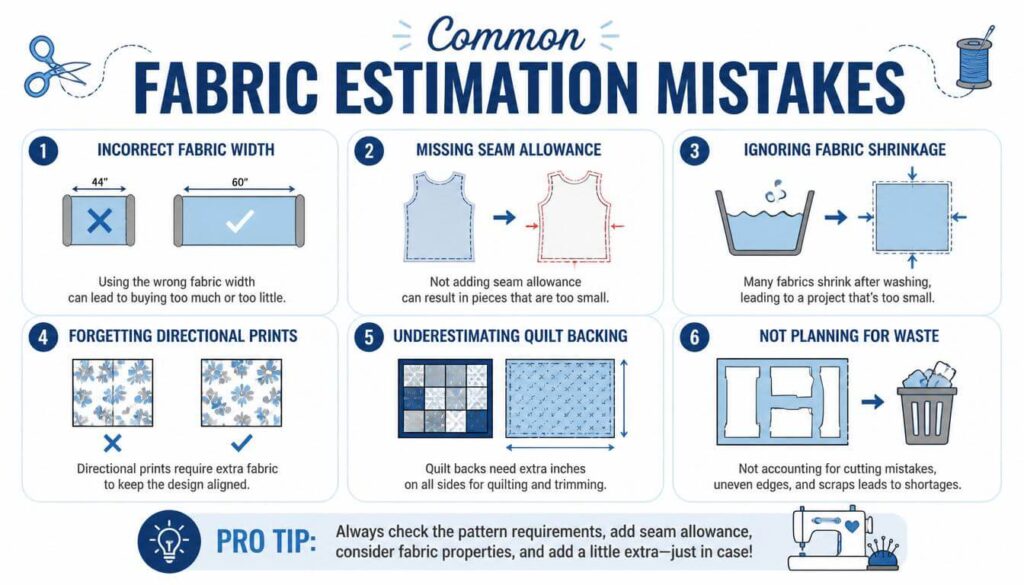
Even experienced sewists occasionally buy too much—or too little—fabric. Most mistakes happen because important details are overlooked during planning.
Avoid these common problems before purchasing your fabric.
1. Choosing the Wrong Fabric Width
Fabric is commonly sold in widths such as 36″, 44″, 54″, 60″, and 108″. Selecting the wrong width can significantly change the required yardage.
Tip: Always check the width printed on the fabric bolt before using the calculator.
2. Forgetting Seam Allowances
Some sewing patterns include seam allowances, while others require you to add them manually.
If your pattern doesn’t include seam allowances, enable the calculator’s extra allowance option to avoid running short on fabric.
3. Ignoring Fabric Shrinkage
Natural fibers like cotton and linen may shrink after washing.
If you plan to pre-wash your fabric, buying a little extra helps compensate for shrinkage.
4. Overlooking Directional Prints
Striped fabrics, plaids, florals, and directional prints often require additional fabric so the design lines up correctly.
These fabrics usually need more yardage than plain fabrics.
5. Forgetting Pattern Matching
Large repeating prints require extra fabric to align the design across seams.
Skipping this step often leads to noticeable mismatched patterns in the finished project.
6. Estimating Quilt Backing Incorrectly
Quilt backing should always be calculated separately from the quilt top, especially when using 108-inch backing fabric.
Using the same estimate for both can result in buying the wrong amount of fabric.
7. Relying Only on Fabric Charts
Traditional yardage charts provide general estimates, but they can’t account for your specific measurements, fabric width, or project layout.
Using a Fabric Calculator provides a more personalized estimate based on your project details.
Why Use the SewSmartHub Fabric Calculator?
Planning a sewing project should be exciting—not stressful. Our calculator is designed to simplify fabric estimation, helping beginners and experienced sewists make better buying decisions.
Key Benefits
✅ Free to use — no registration required
✅ Calculates fabric for garments, quilting, and general sewing projects
✅ Supports multiple fabric widths
✅ Displays results in yards and meters
✅ Optional seam allowance and waste buffer
✅ Helps reduce unnecessary fabric waste
✅ Saves time compared to manual calculations
✅ Beginner-friendly interface
Whether you’re sewing your first pillow cover or planning a large quilting project, the SewSmartHub Fabric Calculator helps you estimate fabric with greater confidence.
Frequently Asked Questions (FAQ)
Conclusion
Buying the right amount of fabric doesn’t have to be difficult.
Whether you’re sewing a dress, making curtains, quilting a blanket, or creating simple home décor projects, our Fabric Calculator helps you estimate fabric requirements quickly and accurately.
By taking into account your measurements, fabric width, project type, and optional seam or waste allowances, it removes the guesswork from fabric planning and helps reduce unnecessary waste.
Instead of relying on generic fabric charts or manual calculations, you can make informed buying decisions in just a few clicks.
Ready to Start Your Project?
Use our free Fabric Calculator to estimate fabric yardage for clothing, quilting, curtains, cushions, and other sewing projects—fast, accurate, and completely free.
Click the Fabric Calculator above and get your estimate instantly.
Then bookmark this guide so you can return whenever you need help understanding fabric width, measurements, or sewing yardage calculations.
About SewSmartHub
SewSmartHub is dedicated to creating practical sewing tools and easy-to-follow educational guides for beginners, hobbyists, quilters, and DIY sewing enthusiasts. Our goal is to simplify fabric calculations, explain sewing concepts clearly, and help readers complete projects with confidence.