
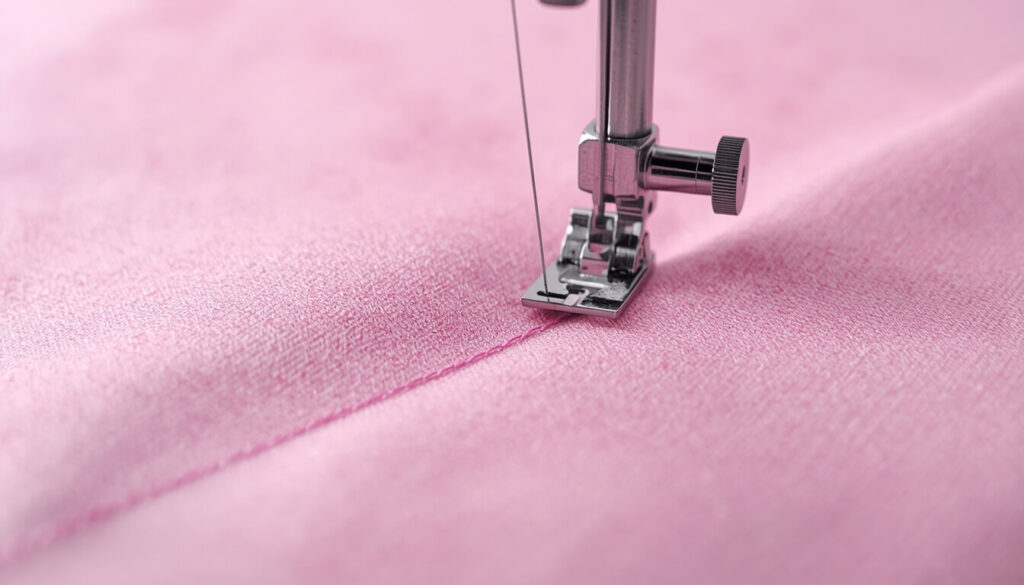
Everything’s going fine, then suddenly a few stitches in the middle of your seam just… aren’t there. The line looks patchy, maybe a little loose, and you’re left staring at the fabric wondering why is my sewing machine skipping stitches all of a sudden. It’s one of the more common stitching problems, and thankfully one of the easier ones to diagnose once you know where to look.
A skipped stitch happens when the needle thread and bobbin thread fail to interlock the way they should, leaving a gap instead of a complete stitch. It’s almost always traceable to one of a small handful of causes — the needle, the tension, lint buildup, or the fabric itself. This guide walks through each one and how to fix it.
Why Is My Sewing Machine Skipping Stitches? (Quick Answer)
Most skipped stitches come down to the needle — bent, dull, the wrong type for your fabric, or inserted incorrectly — since that’s what determines whether the hook can catch the thread loop in the first place. After the needle, the next most common culprits are uneven thread tension and lint packed into the bobbin area. Replacing the needle, rethreading the machine, and cleaning out the bobbin race resolves the vast majority of cases.
What Do Skipped Stitches Actually Look Like?
A skipped stitch happens when the top thread loops down but the bobbin thread doesn’t catch it — so instead of a locked stitch, you get a gap. Most home machines rely on what’s called a lockstitch, where the needle thread and bobbin thread interlock inside the fabric layers rather than on the surface — which is exactly the connection that fails to form when a stitch skips.
Flip the fabric over and you’ll usually see it clearly on the underside: a stretch of stitching where the thread simply isn’t there, sometimes alternating with normal stitches right next to it. On topstitching especially, it’s easy to spot at a glance, and it weakens the seam wherever it happens.
Common Causes of Skipped Stitches
Needle Problems (Bent, Dull, Wrong Type, or Inserted Incorrectly)
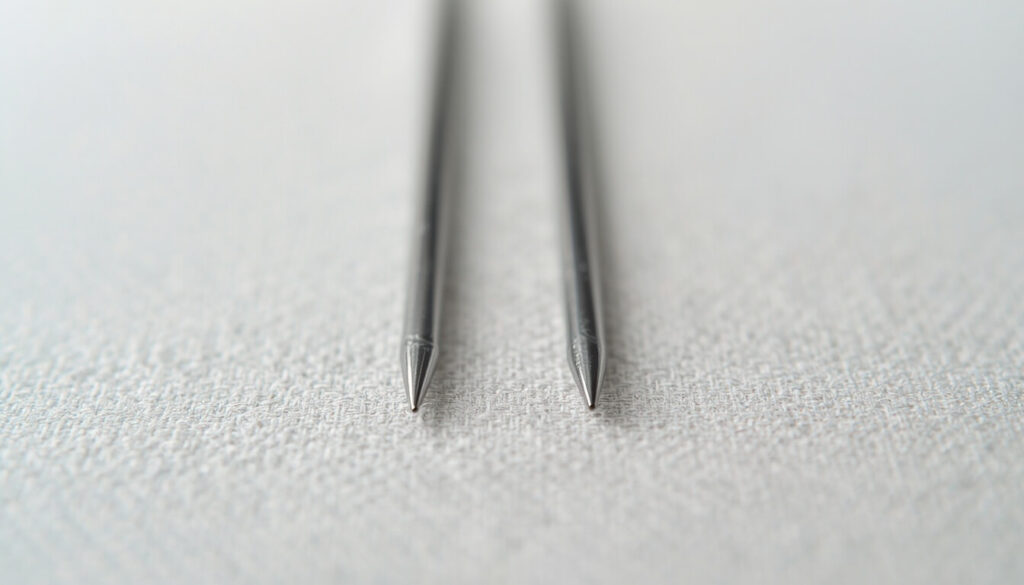
The needle is behind more skipped-stitch cases than anything else, and there are a few ways it can go wrong. A bent tip — even one you can’t see with the naked eye — throws off the tiny clearance between the needle and the hook, so the hook misses the thread loop.
A dull needle drags through fabric instead of piercing cleanly, and the wrong needle type causes the same resistance: a universal needle on a stretch knit, for instance, can push the fabric down instead of piercing it, rather than parting the fibers the way a ball point needle would. Even a good needle inserted slightly crooked, or not pushed all the way up into the clamp, can throw off that same critical clearance.
Thread Tension Imbalance
The upper thread and bobbin thread are supposed to meet and lock at the same point inside the fabric. When one is pulling noticeably harder than the other, that meeting point shifts, and stitches can fail to form properly. You’ll usually see one thread color peeking through on the wrong side of the fabric when tension is off.
Lint and Buildup in the Bobbin Area
Every stitch sheds a little lint, and it collects fastest in the bobbin race — the small channel where the hook passes to catch the thread loop. Enough buildup there physically blocks that catch from happening cleanly, which shows up as skipped stitches. If it’s been a while since a deep clean, our how to clean a sewing machine guide covers the full process.
Low-Quality or Mismatched Thread
Cheap thread sheds more lint and often has uneven thickness along the spool, both of which make it harder for the machine to form a consistent stitch. Using the wrong weight of thread for your project — heavy topstitching thread paired with a needle sized for lightweight fabric, for example — causes the same kind of strain.
Sewing Technique (Sewing Too Fast or Pulling Fabric)
The presser foot and feed dogs are calibrated to move fabric at a specific, steady pace. Sewing too fast, especially on thick fabric, can cause that mechanism to slip. Pulling or tugging the fabric as you sew has a similar effect — it interrupts the tiny, precise movements the machine relies on to form each stitch correctly.
Fabric Type (Stretch, Thick, or Slippery Materials)
Some fabrics are simply harder to feed evenly. Stretch knits can shift under the presser foot, slippery fabrics like satin can slide out of position, and thick layers can be tough for the needle to penetrate cleanly. These aren’t machine problems so much as situations that call for the right needle, a stabilizer, or a slower, steadier hand.
How to Fix Skipped Stitches (Step-by-Step)
- Rethread the machine completely. Remove the thread from both the top and the bobbin, raise the presser foot so the tension discs open, and rethread from scratch through every guide.
- Replace the needle. Even if it looks fine, swap it for a fresh one of the correct type and size for your fabric, and make sure it’s pushed all the way up into the clamp before tightening the screw.
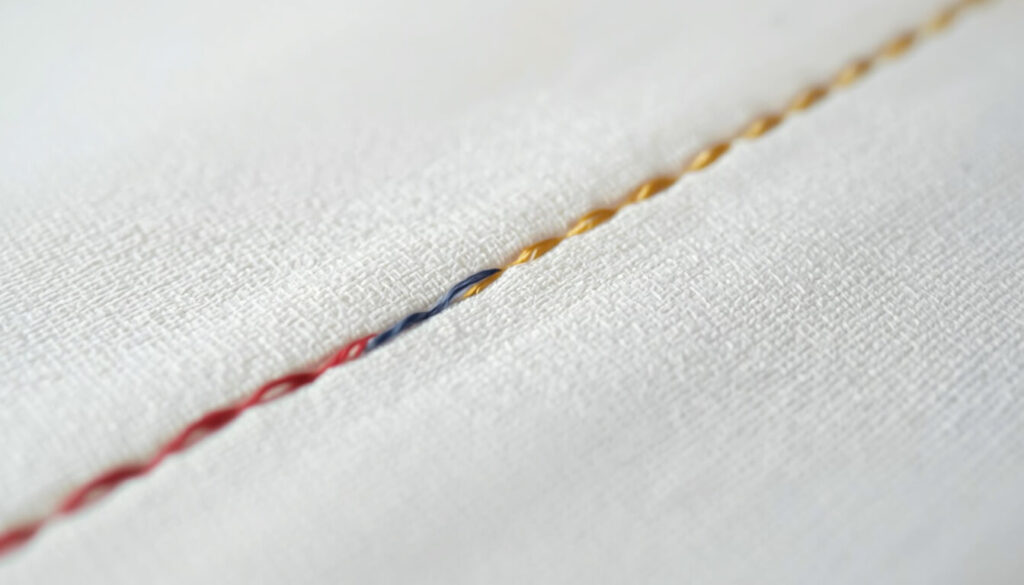
- Check and adjust the tension. Sew a test line using two different thread colors — one on top, one in the bobbin. If the top color shows on the underside, the upper tension is too tight; if the bobbin color shows on top, it’s too loose. Adjust one small increment at a time and retest.
- Clean the bobbin area. Remove the needle plate and bobbin case, and brush out any lint from the bobbin race. A small vacuum attachment works well here — avoid canned air, since it can push lint deeper into the machine instead of out.
- Test on scrap fabric. Sew a short test line on a spare piece of the same fabric before returning to your project, to confirm the skipping has actually stopped.
How to Prevent Skipped Stitches in the Future
A handful of habits go a long way toward keeping skipped stitches from coming back:
- Start each new project with a fresh needle matched to the fabric type
- Re-thread the machine whenever you switch thread weight or type
- Clean lint out of the bobbin area every few projects
- Stick to a reputable thread brand rather than the cheapest option available
- Let the presser foot and feed dogs do the work — avoid pulling fabric through as you sew
When to See a Professional
If you’ve worked through rethreading, a new needle, tension adjustments, and a clean bobbin area and stitches are still skipping — especially across every fabric type, not just one tricky material — the issue is likely mechanical rather than something you can fix at home. A needle-to-hook timing problem is common at this stage, and it genuinely needs a trained technician rather than more at-home troubleshooting. For a wider look at other stitch-related issues, our common sewing machine problems and solutions guide is worth browsing next — including what to check if your machine has started jamming instead of just skipping.
FAQs
Conclusion
So — why is my sewing machine skipping stitches? In the overwhelming majority of cases, it’s the needle, the tension, or lint in the bobbin area, and all three are things you can check and fix at home in a few minutes. Work through the causes in order, starting with the needle, and most skipped stitches clear up long before you’d need a repair shop.
Once your stitches are running clean again, our how to thread a sewing machine guide is a good one to bookmark, and our fabric yardage calculator
can help you plan your next project while you’re at it.Once your stitches are back to normal, browse our common sewing machine problems and solutions guide for other issues, or head to our how to thread a sewing machine guide to make sure your setup is solid before your next project.