
If you’ve ever picked up a small, clear bottle labeled “sewing machine oil” and wondered whether it’s really any different from the oil in your kitchen cabinet, you’re not alone. So — what is sewing machine oil, exactly? It’s a lightweight, purpose-made lubricant designed to cut friction between the tiny metal parts inside a sewing machine, without staining fabric or gumming up over time. It looks simple, but the formula behind it is more specific than most sewists realize.
This guide breaks down what the oil is actually made of, the different types you’ll come across, and how to pick the right bottle for your machine — without repeating the step-by-step oiling process, which we’ve already covered in detail in our how to oil a sewing machine guide.
- What Is Sewing Machine Oil? (Quick Answer)
- What Is Sewing Machine Oil Made Of?
- Sewing Machine Oil vs. Regular Household Oil
- Types of Sewing Machine Oil by Use
- What Makes Sewing Machine Oil "Good"? Key Characteristics to Look For
- Can You Use a Substitute in an Emergency?
- How to Tell If Your Sewing Machine Oil Has Gone Bad
- How to Choose the Right Sewing Machine Oil
- FAQs
- Conclusion
What Is Sewing Machine Oil? (Quick Answer)
Sewing machine oil is a thin, refined lubricant made specifically to reduce metal-on-metal friction inside a sewing machine’s moving parts — the hook, needle bar, gears, and shafts. Good sewing machine oil is clear or very pale, low in viscosity so it can reach tight spaces, and formulated to leave little to no residue behind. Unlike motor oil, cooking oil, or general household oil, it’s built to never stain fabric and to stay stable at the speeds and temperatures a sewing machine runs at.
What Is Sewing Machine Oil Made Of?
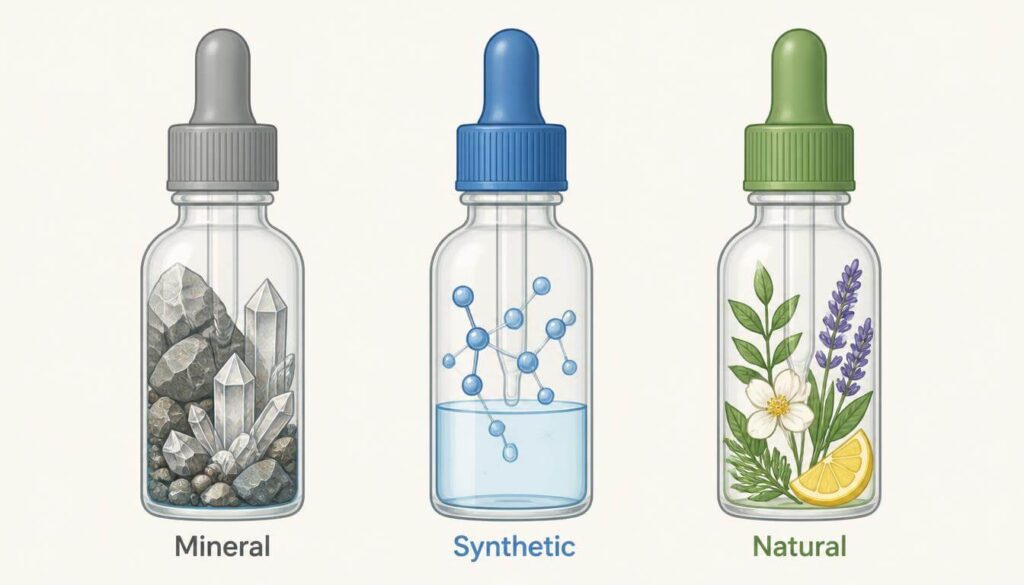
Not all sewing machine oil comes from the same base. Depending on the brand and price point, you’ll usually find one of three types on the shelf.
Mineral Oil
Most sewing machine oil on the market is a refined mineral oil — a petrochemical product, meaning it’s distilled from petroleum. It’s popular because it’s odorless, watery-clear, and does the job reliably at a low cost. According to Wikipedia’s overview of mineral oil, the highly refined grades used in consumer products are processed specifically to remove impurities that could otherwise cause staining or buildup — which is exactly the quality sewing machine manufacturers rely on.
Synthetic Oil
Synthetic sewing machine oil is engineered rather than refined from crude oil. It tends to be more expensive, but it’s generally gentler on rubber, plastic, and painted surfaces, and it holds up better at the higher speeds you’ll find in industrial or heavy-use machines.
Natural Oil
A smaller share of sewing machine oils use natural bases like jojoba or silicone oil. They’re marketed as a “greener” option, but they don’t always lubricate as consistently as mineral or synthetic oil, and a poorly balanced natural oil can gum up moving parts if it isn’t mixed correctly.
Sewing Machine Oil vs. Regular Household Oil
It’s tempting to think any thin, clear oil will do the job — but that’s one of the most common (and costly) assumptions in sewing machine care. Motor oil, cooking oil, and general-purpose household oils are formulated for completely different jobs: they’re often thicker, contain additives, and aren’t tested for contact with fabric.
| Feature | Sewing Machine Oil | Household / Motor Oil |
|---|---|---|
| Viscosity | Very low, flows into tiny gaps | Often thicker |
| Staining risk | Minimal to none | High — can leave permanent marks |
| Residue buildup | Low, won’t gum up parts | Can thicken and attract lint |
| Additives | None that affect fabric | May include detergents, additives |
| Safe on rubber/plastic | Yes | Not always |
A drop of the wrong oil might seem harmless the day you apply it, but a stained sleeve or a gummed-up hook race a few weeks later usually traces straight back to using the wrong bottle.
Types of Sewing Machine Oil by Use
Sewing machine oil isn’t one-size-fits-all. The right type depends on what kind of machine you’re maintaining.
Standard Oil for Domestic Machines
This is the everyday oil most home sewists reach for — a light, general-purpose lubricant sold in small bottles with a fine-tipped applicator, made for the moderate speeds of a home sewing machine.
Synthetic Oil for High-Speed Industrial Machines
Industrial and high-speed sewing heads generate more heat and friction, so many manufacturers recommend a synthetic oil specifically rated for that higher speed range, rather than the standard oil used on domestic machines.
Cleaning Oil
Some portable or heavily used machines benefit from a separate cleaning oil, which is flushed through the mechanism to loosen built-up dust and debris before a lubricating oil is applied.
Thread Lubricant
This one surprises a lot of sewists: thread lubricant isn’t applied to the machine at all. It’s applied to the thread itself before sewing heavy, thick, or non-skid materials, to help the thread glide through the fabric without breaking.
What Makes Sewing Machine Oil “Good”? Key Characteristics to Look For
Not every bottle labeled “sewing machine oil” performs the same. A few characteristics separate the oils worth buying from the ones that cause problems down the line:
- Low viscosity — thin enough to seep into narrow gaps and wicks without pooling
- Non-staining — won’t transfer onto fabric during a test stitch
- Residue-free — doesn’t thicken or leave a sticky film that attracts lint
- Temperature stable — performs consistently whether your sewing room is warm or cool
- Compatible with rubber and plastic — won’t degrade belts, seals, or housing over time
Can You Use a Substitute in an Emergency?
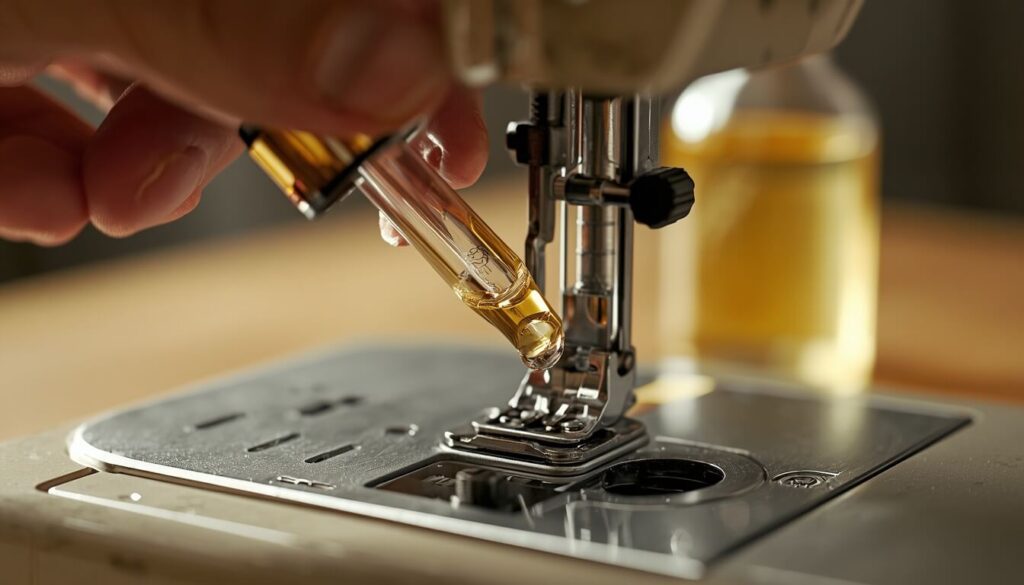
If you’re in a pinch and don’t have proper sewing machine oil on hand, some sewists reach for alternatives like baby oil or light mineral oil, since both are technically mineral-oil based. It can work in a genuine emergency, but it’s a gamble many household oils, engine oils, and even some “clear” alternatives aren’t refined to the same standard, and they can leave stains that show up weeks later or attract more lint over time than a proper sewing machine oil would.
One rule that’s worth remembering regardless of what you use: never substitute WD-40 or a general spray lubricant. Those products are designed to displace water and loosen rust, not to lubricate precision parts, and they can actually damage rubber and plastic components inside your machine.
How to Tell If Your Sewing Machine Oil Has Gone Bad
Sewing machine oil doesn’t last forever once opened. A few signs it’s time to replace the bottle:
- It’s turned yellow or cloudy instead of clear
- It’s thickened or feels sticky rather than watery
- It has developed a noticeable smell
- It leaves visible residue on a test strip of fabric
Using expired oil defeats the purpose instead of reducing friction, thickened oil can trap lint and create the exact buildup you’re trying to prevent. If your machine is already showing signs of grime or lint buildup, it’s worth working through our how to clean a sewing machine guide before applying any fresh oil.
How to Choose the Right Sewing Machine Oil
A few practical guidelines make this an easy decision:
- Check your manual first. Some manufacturers specify a particular oil type or brand.
- Buy from a reputable sewing brand, not a generic hardware-store bottle.
- Look for “clear” and “non-staining” on the label — these two words matter more than the price.
- Match the oil to your machine type — standard oil for home machines, synthetic for industrial or high-speed use.
- Choose a bottle with a fine applicator tip, so you can control exactly how much oil goes where.
Getting the right oil is only half the job — knowing where and how often to apply it matters just as much, and that’s covered step by step in our main oiling guide.
FAQs
Conclusion
So, what is sewing machine oil, really? It’s a purpose-built lubricant usually a refined mineral oil, sometimes synthetic or natural designed specifically to reduce friction inside your machine without staining fabric or leaving residue behind. Understanding what’s in the bottle, and matching the right type to your machine, makes every future oiling session more effective and keeps your machine running quietly for years.
Once you’ve got the right oil on hand, head over to our how to oil a sewing machine guide for the exact points to apply it. And if you’re planning your next project, don’t forget to run your measurements through our fabric yardage calculator before you cut.
Ready to put the right oil to work? Head to our how to oil a sewing machine guide for exact oiling points and steps, or use our fabric yardage calculator to plan your next project while your machine dries.