
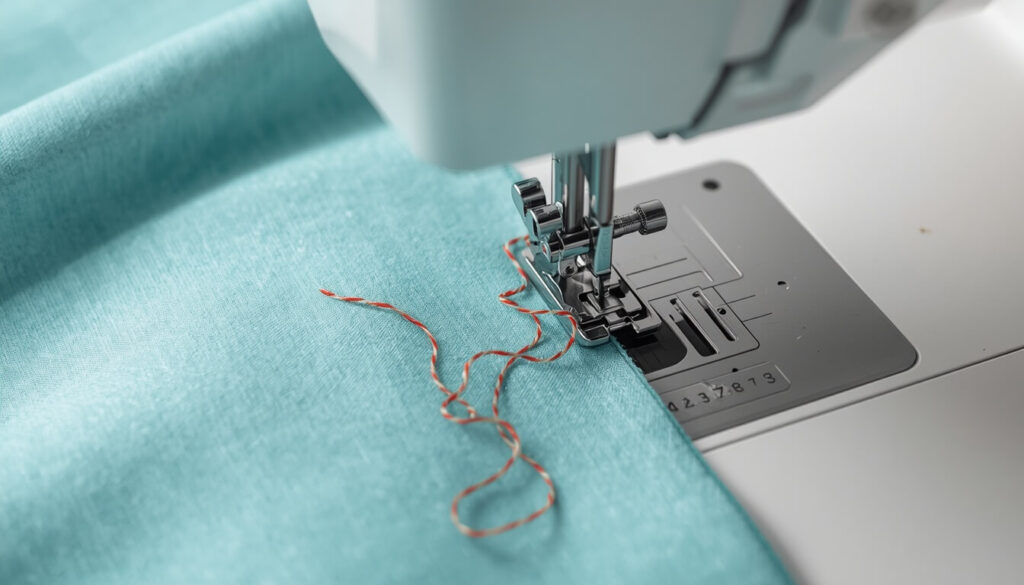
You’re halfway through a seam, everything sounds fine, and then… nothing. The needle locks, the handwheel won’t budge, and there’s a tangled knot of thread staring back at you from under the fabric. Why is my sewing machine jamming? In almost every case, it comes down to one of a handful of usual suspects: threading, tension, the needle, or a buildup of lint you can’t see until you go looking for it.
The good news is a jam is rarely a sign your machine is broken. Most of the time, it’s the machine telling you something small is off and once you know what to check, a jam takes minutes to clear, not hours. This guide walks through what a jam looks like, why it happens, and exactly how to fix and prevent one.
Why Is My Sewing Machine Jamming? (Quick Answer)
A sewing machine usually jams because the upper thread, bobbin thread, and needle have stopped working together the way they’re supposed to. The most common triggers are incorrect threading, thread tension that’s too tight or too loose, a bent or dull needle, or lint packed into the bobbin area. Clear the tangled thread, re-thread the machine properly, and check the needle and bobbin and most jams resolve on the spot.
What Does a Sewing Machine Jam Actually Look Like?
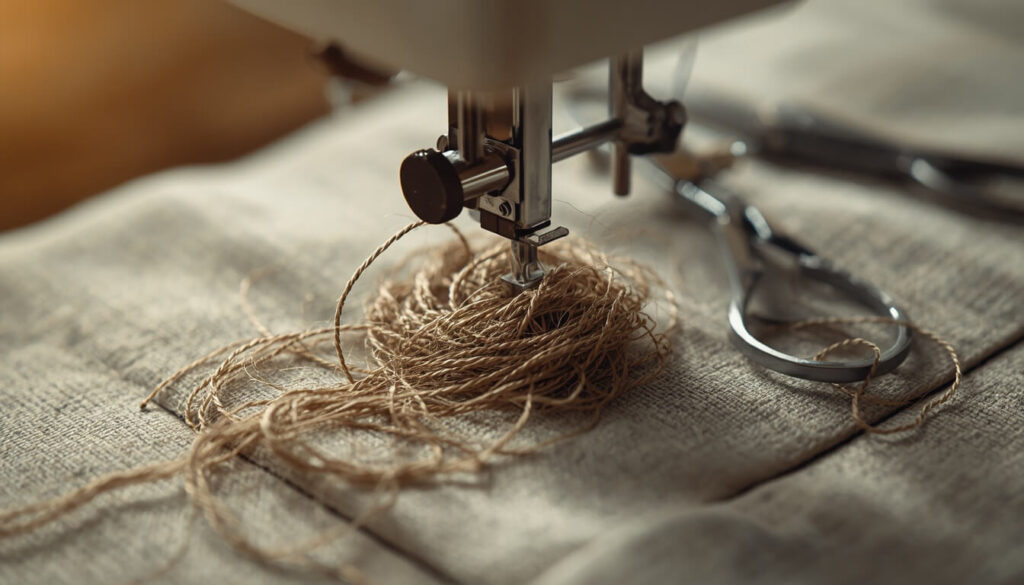
Not every jam looks the same, and knowing which type you’re dealing with points you straight to the fix.
Thread Jam (Bird’s Nest)
This is the most common one — a dense, tangled clump of thread bunched up underneath the fabric, often accompanied by the top thread suddenly going slack. Sewists call it a “bird’s nest” for a reason; it usually means the upper thread and bobbin thread lost sync with each other.
Needle Jam
The needle stalls mid-stroke, refuses to rise, or you hear a sharp click as it strikes something it shouldn’t — the throat plate, a pin, or the bobbin case. A bent needle is the most frequent cause.
Bobbin Jam
The bobbin thread catches, feeds unevenly, or refuses to unwind at all, often paired with a grinding or clicking noise coming from underneath the needle plate.
Common Causes of Sewing Machine Jamming
Incorrect Threading
This is the single most common reason a machine jams. If the upper thread skips a tension disc or guide, it won’t hold the tension it needs, and it tangles with the bobbin thread instead of forming a clean stitch. If you haven’t already, it’s worth double-checking your machine against our how to thread a sewing machine guide even one missed guide is enough to cause a jam.
Wrong or Uneven Thread Tension
Every fabric sews best at a slightly different tension. Set it too tight and the thread can snap or pucker the fabric; set it too loose and the stitches tangle instead of locking together, which is exactly the setup for a jam.
Bent, Dull, or Wrong Needle
A bent needle can strike the throat plate or bobbin case instead of passing cleanly through the fabric, which stops the machine cold. A dull needle drags instead of piercing, and using the wrong needle type — a universal needle on stretch fabric, for example — causes the same kind of resistance.
Lint and Debris Buildup
Every stitch sheds a tiny bit of lint, and it collects fastest around the bobbin case, feed dogs, and tension discs. Left alone, that buildup gets in the way of smooth thread movement and eventually causes a jam. If it’s been a while since your machine was properly cleaned out, our how to clean a sewing machine guide walks through it step by step.
Low-Quality or Old Thread
Cheap or old thread frays and sheds more lint than it should, and uneven thickness along the spool makes it harder for your machine to maintain consistent tension — both of which raise your odds of a jam.
Bobbin Wound or Inserted Incorrectly
An unevenly wound bobbin, or one dropped into the case facing the wrong way, throws off how the bottom thread feeds. According to Wikipedia’s overview of the sewing machine, most home machines rely on a lockstitch, where the needle thread and bobbin thread interlock inside the fabric — so if the bobbin thread isn’t feeding evenly, that interlock breaks down and the machine jams.
How to Fix a Jammed Sewing Machine (Step-by-Step)
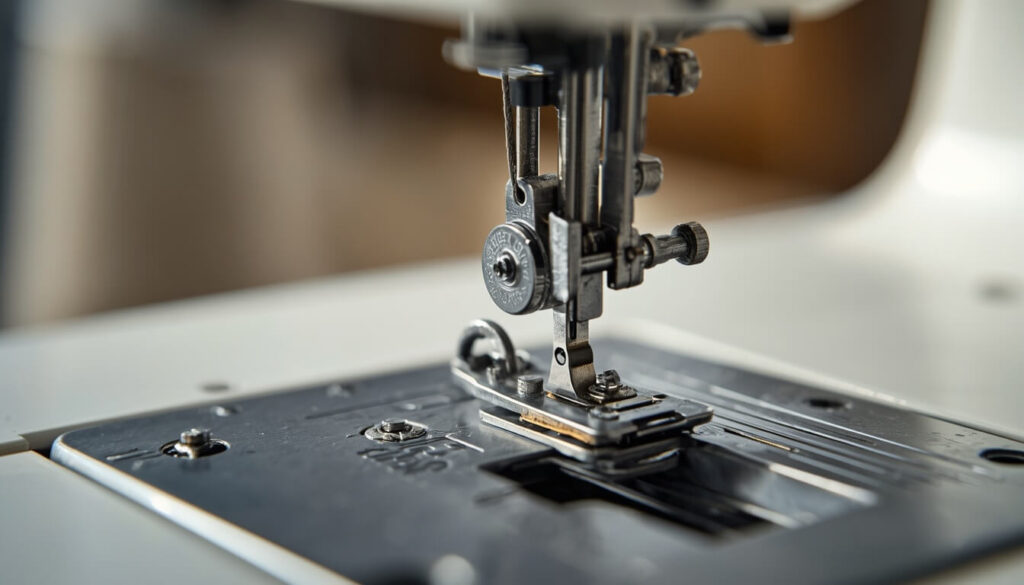
- Stop — don’t force it. Turning the handwheel against resistance can bend the needle or damage the hook mechanism. Turn off the machine first.
- Remove the tangled thread. Lift the presser foot, snip away the visible thread nest with small scissors, and gently pull out any remaining scraps from around the bobbin case.
- Re-thread the machine from scratch. Remove the thread completely — top and bobbin — and re-thread carefully, making sure the thread seats in every guide and tension disc along the way.
- Check the needle. Look closely for any bend or dullness. If you’re not sure, replace it — a fresh needle is inexpensive and removes one variable at a time.
- Check the bobbin. Make sure it’s wound evenly with no loose loops, and that it’s dropped into the case the correct way around.
- Test on scrap fabric. Sew a few stitches on a spare piece before going back to your project, to confirm the tangle is actually gone and not just pushed further into the machine.
How to Prevent Sewing Machine Jams in the Future
A few small habits go a long way toward keeping jams from coming back:
- Re-thread the machine any time you switch thread type or weight, not just when something goes wrong
- Swap in a fresh needle at the start of each new project
- Clean lint out of the bobbin area every few projects, not just when it’s visibly dirty
- Stick to a reputable thread brand rather than the cheapest spool on the shelf
- Keep your machine’s regular maintenance schedule — oiling and servicing matter here too, and both are covered in our how to oil a sewing machine guide
When to See a Professional
If you’ve re-threaded, changed the needle, cleaned the bobbin area, and the machine still jams in the same spot every time, the problem may be mechanical rather than something you did — a timing issue or a worn hook mechanism, for example. At that point, it’s worth having a technician take a look rather than repeating the same troubleshooting loop. For a broader rundown of other sewing machine issues and how to tell them apart, our common sewing machine problems and solutions guide is a good next stop.
FAQs
Conclusion
So — why is my sewing machine jamming? Nine times out of ten, it’s threading, tension, the needle, or lint, and all four are things you can check and fix yourself in a few minutes. Work through the causes above in order, and most jams clear up long before you’d need to call in a repair technician.
Once your machine is running smoothly again, our how to thread a sewing machine guide is worth bookmarking for next time, and our fabric yardage calculator can help you plan your next project while you’re at it.
If re-threading and a needle swap didn’t fully solve it, walk back through our how to thread a sewing machine guide from scratch, or browse more troubleshooting guides for other common sewing machine issues.