
If you sat down to sew and the handwheel won’t budge, the pedal does nothing, or the motor hums but the needle stays put, your machine isn’t broken beyond repair it’s usually one of a handful of mechanical or electrical snags. Why is my sewing machine not moving forward almost always comes down to one of six things: a jammed handwheel, a slipped or snapped drive belt, a power issue at the motor, an unresponsive foot pedal, a disengaged clutch knob, or something physically blocking the mechanism underneath.
This guide walks through each cause, how to tell them apart, and how to get your machine moving again plus how to stop it from happening next time.
Quick Answer
If you just want the short version of why is my sewing machine not moving forward, this table covers the five most common causes and their fastest fix.
| Symptom | Likely Cause | Quick Fix |
|---|---|---|
| Handwheel won’t turn at all | Jammed thread or thick fabric stuck inside | Turn power off, clear the jam by hand |
| Motor hums, needle doesn’t move | Drive belt slipped or broken | Check belt tension, replace if worn |
| Nothing happens when you press the pedal | Pedal unplugged or faulty | Reconnect pedal, test with a different outlet |
| Handwheel turns but needle won’t engage | Clutch knob is loose | Tighten the clutch/stop-motion knob |
| Machine was fine, now suddenly stuck | Bobbin case or needle plate jam | Remove bobbin case, check for tangled thread |
What “Not Moving Forward” Actually Means
This is different from a machine that runs but the fabric doesn’t feed under the presser foot — that’s usually a feed dog or stitch-length issue, not a power or mechanical fault. Here, we’re talking about the machine itself refusing to turn, start, or engage: the handwheel is locked, the motor won’t drive the needle, or the pedal gets no response at all.
Knowing the difference saves you from taking apart the wrong part of the machine.
Why Is My Sewing Machine Not Moving Forward? Common Causes
Handwheel Is Stuck or Jammed
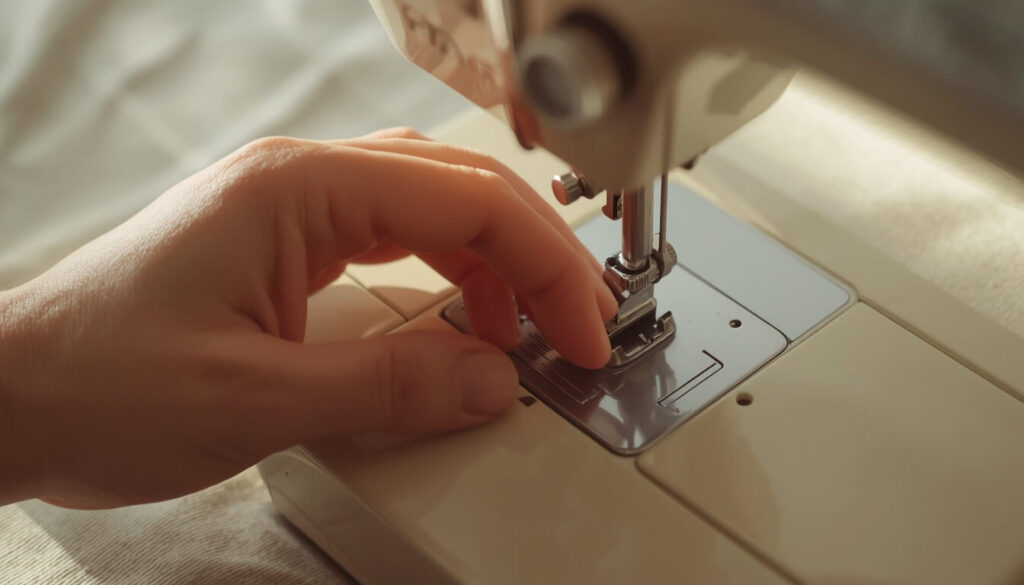
A handwheel that won’t turn by hand — not just with the motor — almost always means something physical is blocking the internal mechanism. Thread wrapped around the bobbin hook, a wad of fabric pulled into the feed dogs, or a bent needle catching on the plate can all lock the wheel solid.
Before forcing anything, unplug the machine, remove the needle and bobbin case, and check underneath the needle plate for tangled thread or debris.
Drive Belt Is Broken or Has Slipped Off
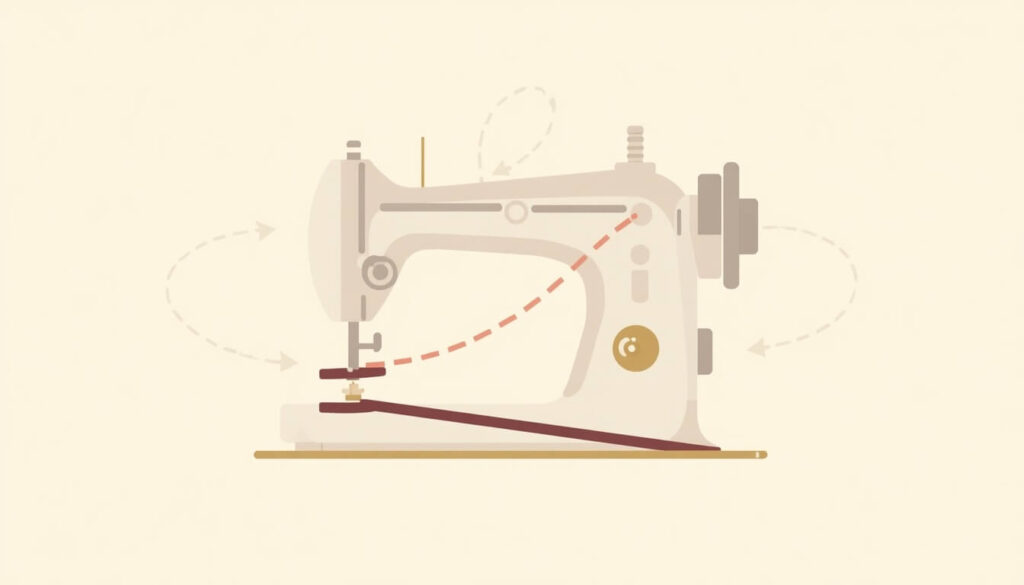
Many machines — especially older or vintage models — use a rubber or leather drive belt to connect the motor to the handwheel. If the belt has cracked, stretched, or slipped off its pulley, the motor will run (you’ll hear it) but the needle won’t move at all.
Open the side or back panel (check your manual for the exact access point) and look at the belt. A loose, frayed, or missing belt is a clear sign it needs tightening or replacing.
Motor Isn’t Receiving Power
If nothing happens at all — no sound, no movement, no light — the issue is likely electrical rather than mechanical. A loose power cord, a blown fuse inside the machine, or a faulty foot control can all cut power to the motor.
Test the outlet with another appliance, check the power cord connection at both ends, and inspect the fuse if your machine has an accessible one.
Foot Pedal Isn’t Responding
Sometimes the machine itself is fine, but the foot pedal (also called the foot control) isn’t sending a signal. This is common after the pedal cord has been bent, pinched, or partially disconnected from repeated storage and travel.
Unplug and firmly reseat the pedal cord at both the machine and the pedal itself, then try again on a different outlet to rule out a power issue.
Clutch Knob Is Disengaged
Most machines have a clutch or “stop motion” knob on the handwheel that lets you disengage the needle mechanism for bobbin winding. If this knob is loose or was left in the disengaged position, the handwheel will spin freely without moving the needle at all.
Check that the clutch knob is turned all the way in and tightened before assuming there’s a bigger problem.
Thread Tangled Inside the Mechanism
A tangled “bird’s nest” of thread under the needle plate or wrapped around the bobbin hook is one of the most common causes of a machine that suddenly locks up mid-project — often paired with a jamming needle or skipped stitches beforehand.
Bobbin Case Jammed Under the Needle Plate
If the bobbin case has shifted out of place or a broken needle fragment has fallen into the hook area, the whole mechanism can seize. Removing the bobbin case and needle plate to inspect the hook race directly usually reveals the blockage.
How to Fix a Sewing Machine That Won’t Move
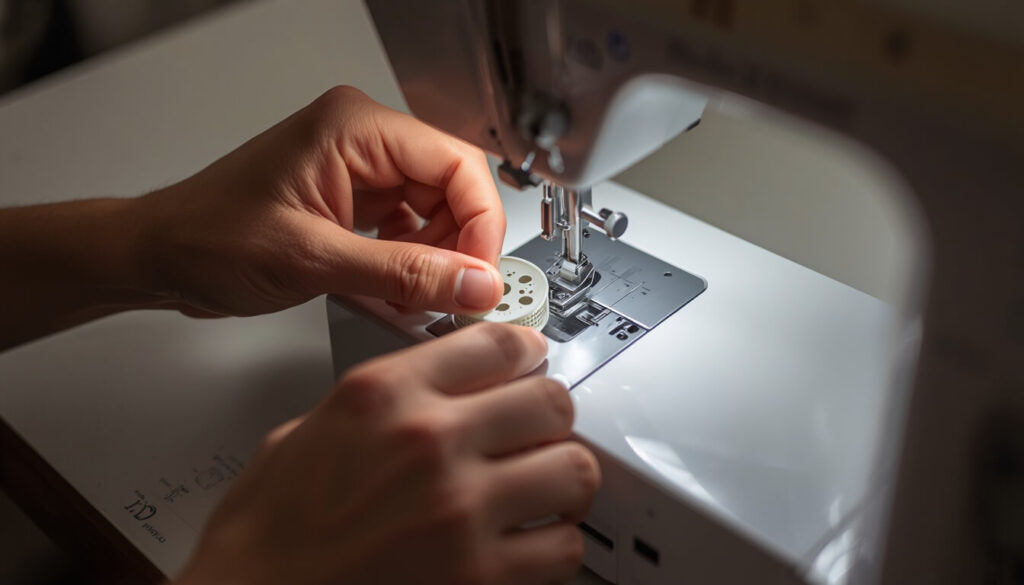
Once you’ve spotted the likely cause, fixing a sewing machine that’s not moving forward usually takes just a few minutes. Work through these steps in order:
- Unplug the machine first. Never troubleshoot a jam with the power connected.
- Remove the needle, presser foot, and bobbin case. This gives you a clear view of the hook and feed dog area.
- Clear any visible thread, lint, or fabric from around the hook and feed dogs by hand — don’t force the handwheel while debris is still present.
- Turn the handwheel gently by hand (toward you, never backward) to check whether it now moves freely.
- Check the drive belt if the motor runs but the needle doesn’t move — tighten or replace it if it’s loose or cracked.
- Reseat the foot pedal cord and test on a different power outlet.
- Reassemble and test on scrap fabric before returning to your project.
If your machine hasn’t been cleaned or oiled recently, do that as part of this process — a dry, lint-packed mechanism is far more likely to jam again even after you clear it once.
When to Call a Professional
If you’ve cleared visible jams, checked the belt, and confirmed the machine is getting power but it still won’t move, the problem may be deeper — a worn gear, a damaged motor, or timing that’s slipped out of sync. At that point, a qualified sewing machine technician can diagnose it properly rather than risk further damage by continuing to force parts by hand.
How to Prevent This From Happening Again
Most “machine won’t move” jams trace back to the same root cause: lint and thread buildup that’s never fully cleared out. Making a habit of cleaning your machine after every few projects, and keeping the internal mechanism properly oiled, keeps the handwheel turning freely and the motor running the way it should.
According to background on how sewing machines are engineered, the stitching mechanism relies on multiple moving parts working in precise sync — which is exactly why a small amount of debris in the wrong spot can bring the whole thing to a stop.
Mistakes to Avoid
- Forcing the handwheel when it’s jammed — this can bend the needle bar or damage internal gears.
- Ignoring a humming motor with no needle movement — this usually means belt damage that gets worse the longer it’s used.
- Skipping regular cleaning because the machine “still works fine” — buildup is often invisible until it causes a full jam.
- Using the wrong needle size for your fabric, which increases the chance of bent needles catching in the plate.
FAQs
Conclusion
So why is my sewing machine not moving forward? In almost every case, it’s a jam, a loose belt, a disconnected pedal, or a power issue not permanent damage. Work through the mechanism methodically, starting with the simplest checks, and most machines are back up and running within a few minutes.
Once your machine is moving smoothly again, plan your next project’s fabric needs with the fabric yardage calculator and if jams keep coming back, our guide to common sewing machine problems