
Standing in front of a shelf full of sewing machines — or scrolling through fifty tabs of Amazon reviews is enough to make anyone want to give up before they’ve even threaded a needle. If you’re trying to figure out the best sewing machine for beginners, the good news is that you don’t need the most expensive or most complicated model on the shelf. You need one that’s reliable, easy to thread, and forgiving while you learn.
This guide walks you through exactly what to look for, which machines actually hold up for new sewists, and the mistakes that send so many beginners back to the store within a month.
- Quick Answer
- What Makes a Sewing Machine Good for Beginners?
- Mechanical vs Computerized Sewing Machines: Which Is Best for a Beginner?
- Best Sewing Machines for Beginners in 2026
- How to Choose the Best Beginner Sewing Machine
- What Comes With a Beginner Sewing Machine?
- Where to Buy a Beginner Sewing Machine
- Common Mistakes Beginners Make When Choosing a Sewing Machine
- FAQs
- Conclusion
- Ready to Start Your First Project?
- Related Articles
Quick Answer
If you want the short version: the best beginner sewing machine is a computerized model with an automatic needle threader, a top drop-in bobbin, and a simple stitch selection something like the Brother CS7000X. If you’d rather have a sturdy mechanical machine with fewer buttons to worry about, the Singer Heavy Duty 4423 is a solid pick, especially if you’ll be sewing thicker fabric like denim.
Either way, the machine that suits you best depends on your budget, what you plan to sew, and how comfortable you are with digital screens versus dials.
What Makes a Sewing Machine Good for Beginners?
Not every “beginner” machine sold online is actually beginner-friendly. Some are cheap toys that jam after two projects. Others are marketed as beginner machines but come loaded with 200 stitches nobody needs on day one.
Here’s what actually matters when you’re just starting out:
| Feature | Why It Matters for Beginners |
|---|---|
| Automatic needle threader | Saves you from squinting and re-threading by hand every time |
| Top drop-in bobbin | Far easier to load correctly than old front-loading bobbins |
| Simple stitch selection | 15–30 useful stitches beats 200 you’ll never touch |
| Adjustable stitch length and width | Needed for hemming, stretch fabric, and basic garment work |
| Free arm | Makes sewing sleeves, cuffs, and pant legs much easier |
| Sturdy metal interior frame | Keeps the machine stable and reduces skipped stitches |
| Clear instruction manual | You’ll lean on this constantly in your first few weeks |
A machine can have every fancy feature in the world, but if the threading path is confusing or the bobbin door is stiff, you’ll dread using it. Simplicity beats novelty every time when you’re new.
Mechanical vs Computerized Sewing Machines: Which Is Best for a Beginner?
This is usually the first fork in the road, and there’s no universally “correct” answer — it comes down to how you like to work.
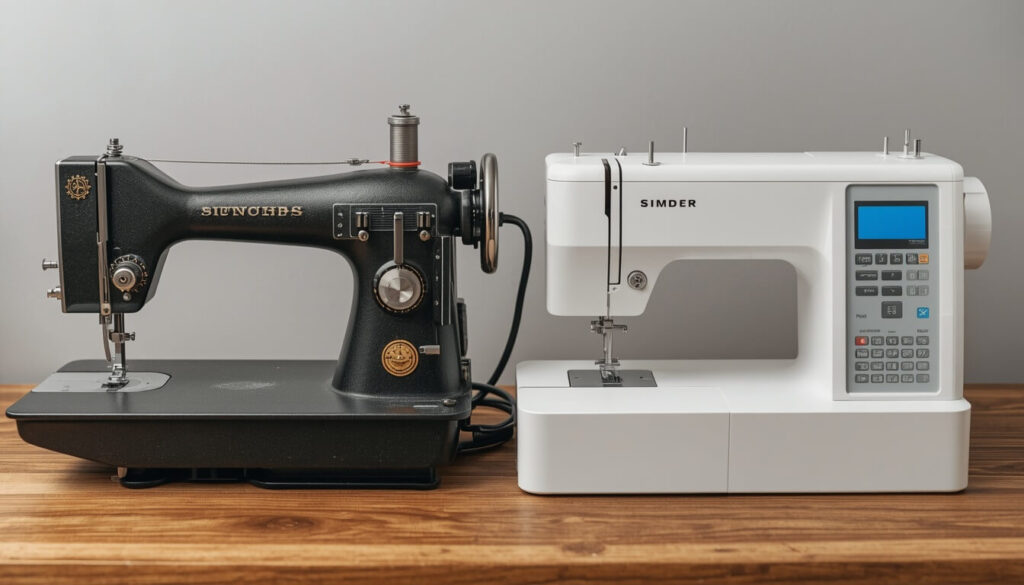
Mechanical machines use dials and knobs to choose your stitch, length, and width. There’s no screen, no menus, and fewer electronic parts to break down. If you’re someone who prefers turning a dial and seeing exactly what you’re adjusting, a mechanical machine will feel intuitive almost immediately.
Computerized machines use a digital screen to select stitches, and many will automatically set the length and width for you once you pick a stitch. This takes some of the guesswork out of the process, which is genuinely helpful when you’re still learning what a “medium zigzag” is even supposed to look like.
One thing worth knowing: computerized machines can occasionally develop electronic faults that a repair shop can’t always fix cheaply, since the screen and circuit board are proprietary parts. Mechanical machines tend to be easier and cheaper to service long-term. Neither downside is a dealbreaker — it’s just something to factor in if you’re choosing between two machines at a similar price.
A simple way to think about it: if you want fewer decisions to make while you sew, go computerized. If you want more hands-on control and long-term repairability, go mechanical.
Best Sewing Machines for Beginners in 2026
These picks are chosen specifically for people who are new to sewing — not for quilters, not for embroidery hobbyists, and not for anyone chasing hundreds of decorative stitches. Just solid, dependable machines that make learning easier.
Best Overall Beginner Sewing Machine
Brother CS7000X
This computerized machine strikes the balance most beginners are actually looking for. It comes with 70 built-in stitches (which is plenty — you won’t use most of them at first, and that’s fine), an automatic needle threader, and a wide table extension that gives you more room to work with larger projects like garments.
One mistake many beginners make is assuming more stitches automatically means better quality. What actually matters here is that the basics — straight stitch, zigzag, and buttonholes — are smooth and consistent, and on this machine they are.
Best Budget Sewing Machine for Beginners
Brother XM2701
If you’re not ready to spend much before you know whether sewing is really for you, this is one of the most affordable machines that still performs reliably. It has 27 stitches, a built-in needle threader, and a free arm for smaller items like cuffs and hems.
It won’t handle heavy fabric like denim or upholstery well, so think of it as a practice machine for lightweight cottons, quilting cotton, and basic garment sewing rather than a long-term workhorse.
Best Computerized Sewing Machine for Beginners
Janome 2222
Janome machines have a reputation for being sturdy and precise, and the 2222 is no exception. It’s simple enough for a first-time sewist but has enough power to handle slightly tougher materials like faux leather or multiple layers of denim without straining.
If you’ve ever had a machine bog down halfway through a thick seam, you’ll appreciate the extra motor strength here compared to entry-level toy-grade machines.
Best Heavy-Duty Sewing Machine for Beginners
Singer Heavy Duty 4423
This is a mechanical machine built around a stronger motor and metal internal frame, which makes it forgiving with thicker fabrics like denim, canvas, and multiple layers. It has fewer stitch options than the computerized picks above, but for beginners who plan to sew practical items — bags, home décor, repairs — that’s rarely a problem.
Because it’s mechanical, there’s also less that can go electronically wrong with it over time, which makes it a popular “buy once, keep for years” choice.
How to Choose the Best Beginner Sewing Machine
Before you buy anything, run through this quick checklist:
- What will you actually sew? Garments and quilting cottons need less power than denim, canvas, or leather.
- What’s your real budget? Decide on a number and stick close to it — a $200 machine that gets used every week beats an $800 machine gathering dust.
- Do you want a screen or dials? Test both in person if you can, at a local dealer or a friend’s house.
- Is it drop-in or front-loading bobbin? Drop-in is easier for beginners, full stop.
- Does it come with a walkthrough manual or video? You’ll need this in your first few weeks more than you think.
- Can you get it serviced locally? Even reliable machines need a tune-up eventually.
Before assuming a more expensive machine will automatically be easier to use, check reviews specifically from beginners, not experienced sewists — their frustrations are usually the ones that matter to you right now.
What Comes With a Beginner Sewing Machine?
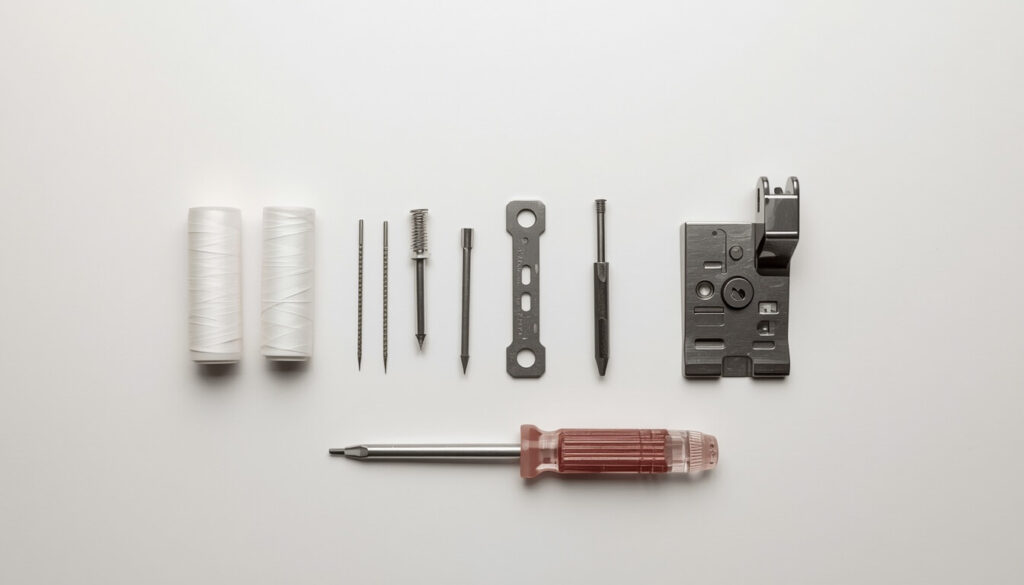
Every new sewing machine, regardless of brand, comes with a baseline set of tools. Here’s what you should expect to find in the box:
- Bobbins — usually one to three; buy a few extra compatible with your model right away
- Needles — a basic universal set to get started
- Presser feet — typically an all-purpose foot, a zipper foot, and a buttonhole foot
- A seam ripper — you’ll use this more than you’d like to admit
- A dust brush and small screwdriver — for basic cleaning and needle changes
- A power cord and foot pedal
In many cases, that’s enough to get you through your first several projects without buying anything extra, aside from good thread and matching needles for your fabric type.
Where to Buy a Beginner Sewing Machine
You have three realistic options, and each has a trade-off:
- Online retailers — the widest selection and usually the best prices, especially for well-known models. Just make sure you’re buying from an authorized seller so the warranty is valid.
- Local sewing machine dealers — usually more expensive, but the machines are tuned before sale, and you get access to in-person classes and repairs.
- Secondhand (thrift stores, marketplace listings, family hand-me-downs) — often the best value if you’re willing to get the machine serviced once before using it regularly. Many older mechanical machines are built extremely well and can outlast newer plastic models.
If you’re unsure, buying online from a reputable seller and keeping your local dealer’s contact info handy for future servicing is usually the easiest middle ground.
Common Mistakes Beginners Make When Choosing a Sewing Machine
- Buying based on stitch count alone. A machine with 200 stitches isn’t better if the basic ones skip or pucker.
- Ignoring fabric type. If you plan to sew jeans or canvas bags, a lightweight machine will struggle and frustrate you fast.
- Skipping the manual. Most “my machine is broken” problems in the first month are threading mistakes, not real faults.
- Overspending before knowing if you’ll stick with it. Start with something dependable in the mid-range rather than maxing out your budget on your very first machine.
- Not checking bobbin type before buying. Front-loading bobbins are harder to master and a common source of early frustration.
FAQs
Conclusion
Choosing the best sewing machine for beginners really comes down to matching the machine to how you actually plan to use it not chasing the longest stitch list or the flashiest screen. A dependable mid-range computerized machine like the Brother CS7000X or a sturdy mechanical option like the Singer 4423 will carry most new sewists through their first year and well beyond it, as long as the basics — threading, bobbin loading, and tension — feel manageable to you.
Once you’ve picked your machine, the real fun starts: learning how it handles different fabrics, mastering your first seams, and slowly building the confidence to tackle bigger projects.
Ready to Start Your First Project?
Once your machine is set up, the next thing you’ll need is the right amount of fabric — and running short mid-project is one of the most common beginner headaches. Try our free fabric yardage calculator before you buy material, so you know exactly how much to grab. And if your machine ever starts acting up along the way, our guide to common sewing machine problems and solutions walks you through the most frequent fixes.