
If you’re asking why does my sewing machine needle keep breaking, it almost always comes down to one of eight things: the wrong needle for your fabric, an incorrectly inserted needle, a bent or worn-out needle, the needle striking the needle plate or bobbin case, contact with the presser foot, sewing over pins, pulling the fabric while you sew, or a machine that’s out of time. Most of these you can fix yourself in a few minutes.
A snapped needle mid-seam is startling, but it’s rarely a sign your machine is broken. It’s usually your machine telling you something specific went wrong and once you know where to look, the fix is often obvious.
- Quick Answer
- Before You Start
- Common Causes of a Broken Sewing Machine Needle
- Needle Size Guide by Fabric
- How to Fix a Needle That Keeps Breaking
- Quick Troubleshooting Checklist
- Helpful Tips to Prevent Future Breaks
- Common Mistakes That Make It Worse
- When to Call a Sewing Machine Technician
- FAQs
- Conclusion
- Related Sewing Machine Troubleshooting
Quick Answer
Stop and check three things first: the needle size matches your fabric, the needle is inserted with the flat side facing the correct direction, and nothing metal (bobbin case, needle plate, presser foot) is out of place. These three checks solve the majority of needle breaks.
Before You Start
Unplug your machine before inspecting the needle area. Turn the handwheel toward you to bring the needle to its highest position this makes it much easier to see what the needle is actually hitting. Keep a small magnet or piece of tape handy to collect any broken needle fragments; a missed shard can jam the hook mechanism later and cause a completely different problem.
Common Causes of a Broken Sewing Machine Needle
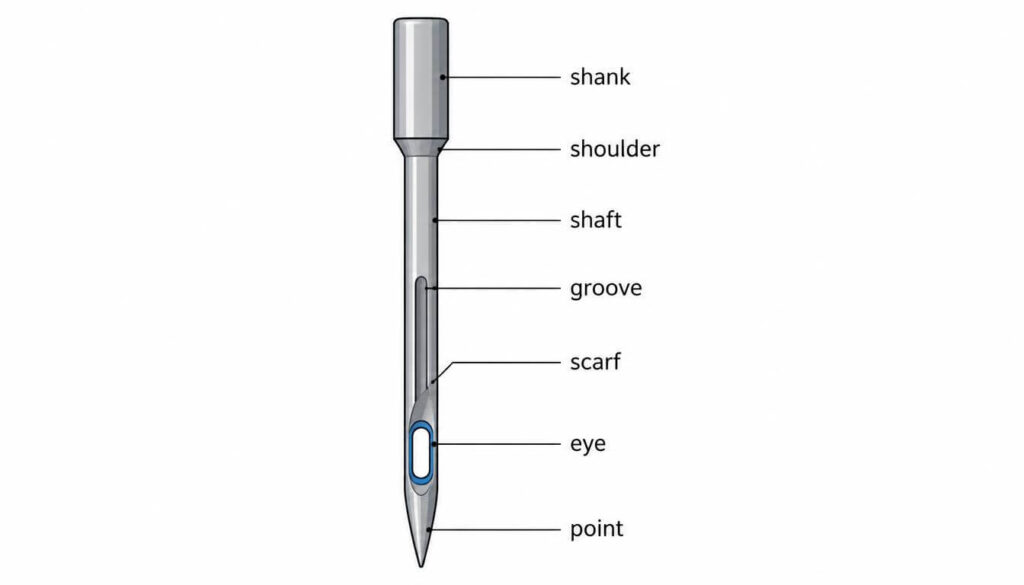
Wrong Needle Size or Type for the Fabric
Every needle is built for a fabric weight. A size 70/10 needle is fine for chiffon but will bend and snap the moment it meets denim or canvas. A size 100/16 needle, on the other hand, is too thick and stiff for lightweight fabric — it can deflect sideways instead of piercing cleanly, then strike the plate.
Needle type matters as much as size. A universal needle (also called the 15×1 or 130/705 needle, the standard shank used in most home machines) works for wovens, but knits need a ballpoint or stretch needle that slides between fibers instead of cutting them. Using a sharp needle on a stretch fabric often causes skipped stitches first, then a break soon after.
Needle Inserted Incorrectly
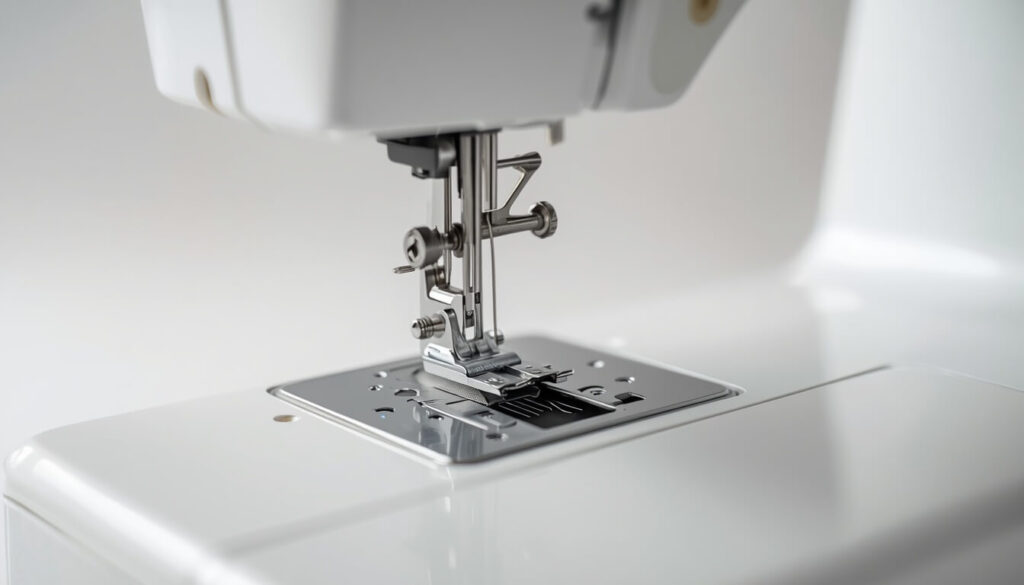
This is one of the most overlooked causes. On most home machines, the flat side of the needle shank faces the back. If it’s inserted backward, or not pushed all the way up into the clamp, the needle sits at a slightly wrong angle. It may sew a few stitches fine, then catch the hook or plate and snap.
Bent, Dull, or Overused Needle
A needle that hit something once and bent slightly won’t always break right away but every stitch after that puts uneven stress on the metal until it finally gives out. Needles also dull with use. Manufacturers generally recommend swapping the needle after about 8 hours of sewing or at the start of a new project, whichever comes first.
Needle Hitting the Needle Plate or Bobbin Case
If your bobbin case wasn’t seated correctly after cleaning, or the needle plate has a small burr from a previous break, the needle can strike metal on its way down. You’ll often hear a distinct clunk or grinding sound right before it snaps. This is a common follow-on issue after a machine has jammed worth checking against our jamming troubleshooting guide if the needle broke during a jam.
Needle Hitting the Presser Foot
Certain feet zipper feet, narrow hemmer feet, piping feet have tighter openings than a standard foot. If the needle position isn’t centered for that foot, or the foot isn’t fully clicked into place, the needle can clip the edge of the foot on the down stroke.
Sewing Over Pins
It feels efficient to sew straight through a pin instead of stopping to pull it. Sometimes the needle slides past without issue. Other times it hits the pin dead-on, and the impact is usually enough to bend or snap the needle instantly — and it can knock the machine slightly out of time in the process.
Pulling or Forcing the Fabric
Sewing machines feed fabric on their own at a set pace. Pulling the fabric from the front, or pushing it from behind faster than the feed dogs are moving it, forces the needle to strike the plate at an angle instead of straight down. This is especially common when sewists get impatient on long, straight seams.
Machine Timing Is Off
If none of the above explains it you’re using the right needle, it’s inserted correctly, nothing is visibly damaged the hook and needle may no longer be synced. Timing shifts after a hard needle strike (like hitting a pin) or from general wear. This one isn’t a DIY fix; it needs a technician.
Needle Size Guide by Fabric
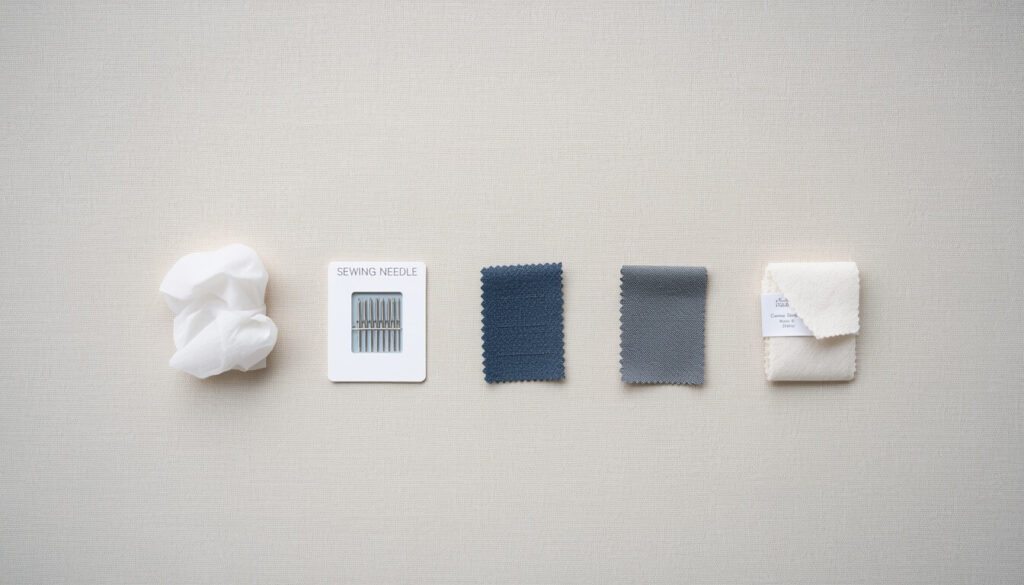
| Fabric Weight | Example Fabrics | Needle Size | Needle Type |
|---|---|---|---|
| Very lightweight | Chiffon, silk, tulle | 60/8 – 70/10 | Universal or Sharp |
| Lightweight | Cotton lawn, voile | 70/10 – 75/11 | Universal |
| Medium weight | Quilting cotton, linen | 80/12 | Universal |
| Medium-heavy | Twill, light denim | 90/14 | Universal or Sharp |
| Heavyweight | Denim, canvas, upholstery | 100/16 – 110/18 | Denim/Jeans needle |
| Knit / stretch | Jersey, spandex, swimwear | 75/11 – 90/14 | Ballpoint or Stretch |
| Leather / vinyl | Faux leather, suede | 90/14 – 100/16 | Leather needle |
How to Fix a Needle That Keeps Breaking
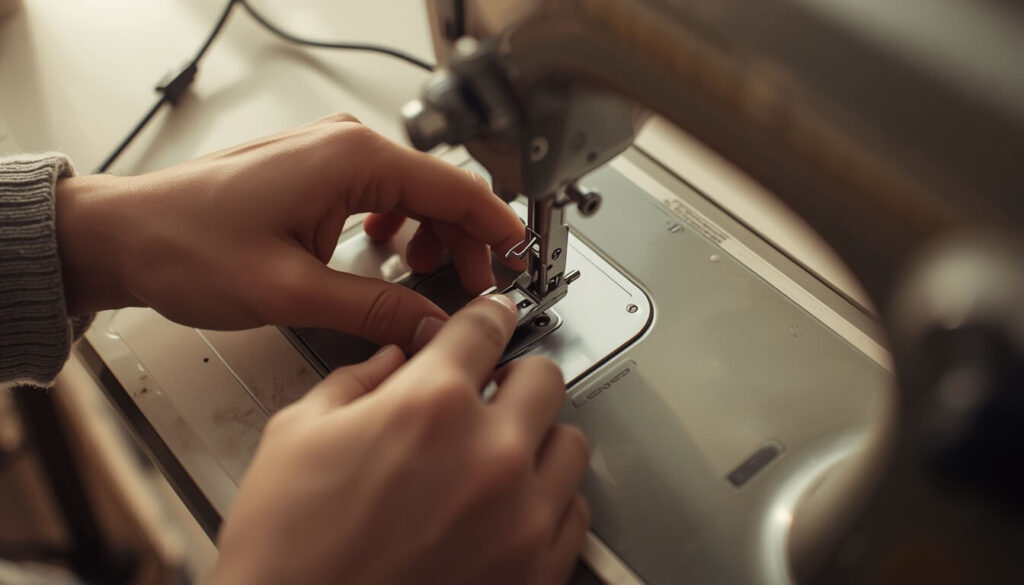
- Turn off and unplug the machine, then remove the broken needle and every fragment check inside the bobbin case too.
- Match a new needle to your fabric using the table above.
- Insert it correctly: push it up as far as it will go into the clamp, flat side facing the back (check your manual a few brands differ), and tighten the screw fully.
- Turn the handwheel by hand for two or three full rotations before sewing. If you feel resistance or hear a scrape, stop something is still misaligned.
- Check the bobbin case is seated and locked, and run a finger (carefully) over the needle plate opening to feel for burrs.
- Test on a scrap of your actual project fabric before returning to the real seam.
- Sew slowly for the first few inches, letting the feed dogs pull the fabric without any pushing or pulling from you.
Quick Troubleshooting Checklist
- Needle matches fabric weight and type
- Needle inserted fully, flat side correct
- No pins in the sewing path
- Bobbin case seated correctly
- Needle plate free of burrs or nicks
- Correct presser foot for the technique
- Hands off the fabric letting the machine feed it
- Needle replaced if it’s been in use for 8+ hours
Helpful Tips to Prevent Future Breaks
Keep a spare pack of needles in a few common sizes 80/12 universal and 90/14 denim cover most home projects. Many sewists overlook that a “brand new” needle can still be faulty out of the packaging; if a fresh needle breaks within the first few stitches, try a second one before assuming the machine itself is at fault. A simple way to think about it is treating needles like a consumable, not a permanent part the way you’d replace a razor blade, not repair one.
Common Mistakes That Make It Worse
Continuing to sew after a bend, rather than stopping to inspect it, is the biggest one. A bent needle rarely fixes itself, and forcing a few more stitches usually turns a bend into a full break sometimes with the fragment landing somewhere hard to retrieve. Reusing an old needle across several different fabric types is another: what worked fine on cotton can snap almost immediately on denim.
When to Call a Sewing Machine Technician
If you’ve replaced the needle, confirmed the size and insertion are correct, checked the bobbin case and plate, and the machine still breaks needles repeatedly especially with an audible grinding sound on the down stroke that points to a timing issue. This isn’t something to force through at home; a technician can re-time the hook in a routine service visit, usually far cheaper than replacing the machine.
FAQs
Conclusion
A sewing machine needle that keeps breaking is frustrating, but it’s almost always traceable to one clear cause wrong needle for the fabric, incorrect insertion, a physical obstruction, or timing. Work through the checklist above in order, and in most cases you’ll be back to a clean, even seam without needing a repair shop.
Planning your next project? Use the Fabric Yardage Calculator to figure out exactly how much fabric you’ll need before you start cutting.