
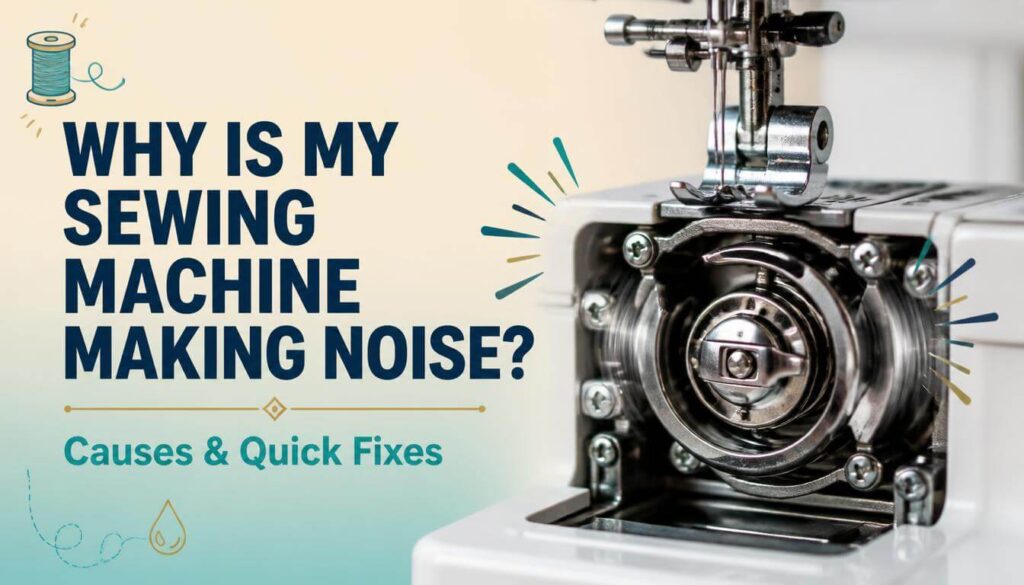
If you’re asking why is my sewing machine making noise, the sound itself is usually the biggest clue. Grinding or squeaking almost always means lint buildup or a machine that needs oiling. Knocking or clunking points to a partially engaged bobbin winder or a bent needle. Clicking often means a loose needle plate screw or the wrong needle-thread combination. Most of these are quick fixes you can do at home in under ten minutes.
A sewing machine should run with a soft, even hum. Anything sharper a knock, a grind, a rattle means something inside is making contact it shouldn’t, and it’s worth stopping to check before it turns into a bigger repair.
- Quick Answer
- Before You Start
- Why Is My Sewing Machine Making Noise? Common Causes
- What Kind of Noise Tells You What's Wrong
- How to Fix a Noisy Sewing Machine
- Quick Troubleshooting Checklist
- Helpful Tips to Keep Your Machine Running Quiet
- Common Mistakes That Make It Worse
- When to Call a Sewing Machine Technician
- FAQs
- Conclusion
- Related Sewing Machine Troubleshooting
Quick Answer
Stop sewing as soon as you hear an unusual sound and listen carefully to what type it is. A quiet way to check this is to run the machine slowly, without fabric, and turn the handwheel by hand for a few rotations first. If you feel resistance or hear grinding at the same point in the rotation every time, that narrows the cause down fast.
Before You Start
Unplug the machine before opening the bobbin cover or removing the needle plate. Have a small screwdriver, a soft brush (an old, clean paintbrush works well), and a drop of proper sewing machine oil ready never use household oil like WD-40, which attracts more lint instead of clearing it.
Why Is My Sewing Machine Making Noise? Common Causes
Lint and Dust Buildup in the Bobbin Area
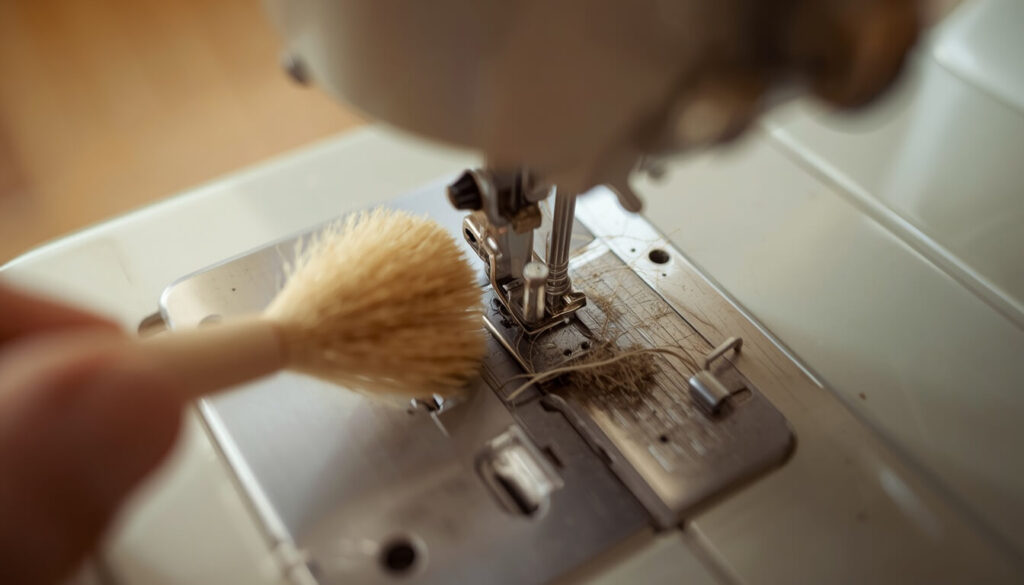
This is the single most common cause of a grinding or clicking sound. Lint collects around the hook race as you sew, and once enough builds up, the hook can’t rotate freely. Many sewists overlook this because the machine still sews fine for a while — the noise shows up before the stitch quality does.
Machine Needs Oiling
Metal parts moving against dry metal produce a distinct squeak or a soft grinding hum, especially on machines that haven’t been oiled in months. This is more common in dry climates or machines that sit unused for long stretches, since the oil around the gears and needle bar dries out over time.
Loose Needle Plate Screw or Panel
A needle plate that isn’t fully tightened can vibrate every time the needle strikes down, creating a rattling or buzzing noise that seems to come from right under the presser foot. It’s an easy one to miss because the machine still sews normally — it’s purely a vibration issue.
Bobbin Winder Still Partially Engaged
When you wind a bobbin, the winder disengages the needle mechanism. If it doesn’t fully disengage afterward, the machine’s internal timing gets thrown off while sewing, producing a knocking or clunking sound. Older machines with a small inner wheel on the handwheel are especially prone to this, since that wheel can work itself loose with use.
Loose or Vibrating Screws
Sewing machines run at high speed, and over time that vibration can loosen screws holding on side panels, the presser foot bar, or internal brackets. A rattle that changes pitch or seems to move around the machine as you sew often traces back to one loose screw rather than a mechanical fault.
Worn or Loose Drive Belt
On machines with a visible belt connecting the motor to the hand wheel, a worn or slightly loose belt can produce a whining or humming noise, particularly at higher speeds. This is more common on older or heavily used machines and is usually a simple belt replacement.
Machine Sitting on an Unstable Surface
Sometimes the machine itself is fine, and the noise is the table. A wobbly surface, a machine sitting directly on a hard tabletop without any cushioning, or a slightly uneven foot can amplify normal vibration into a noticeable rattle.
Hook Timing Issue (When It’s More Than Noise)
The needle and rotating hook inside a sewing machine are built to move in exact sync to form each stitch. When that sync shifts often from a hard needle strike, like hitting a pin the hook and needle can collide slightly on every rotation, producing a sharp knock that repeats with perfect regularity. If you’ve had a needle snap recently, it’s worth checking our guide on why sewing machine needles keep breaking this can also be an underlying issue behind both problems at once.
What Kind of Noise Tells You What’s Wrong
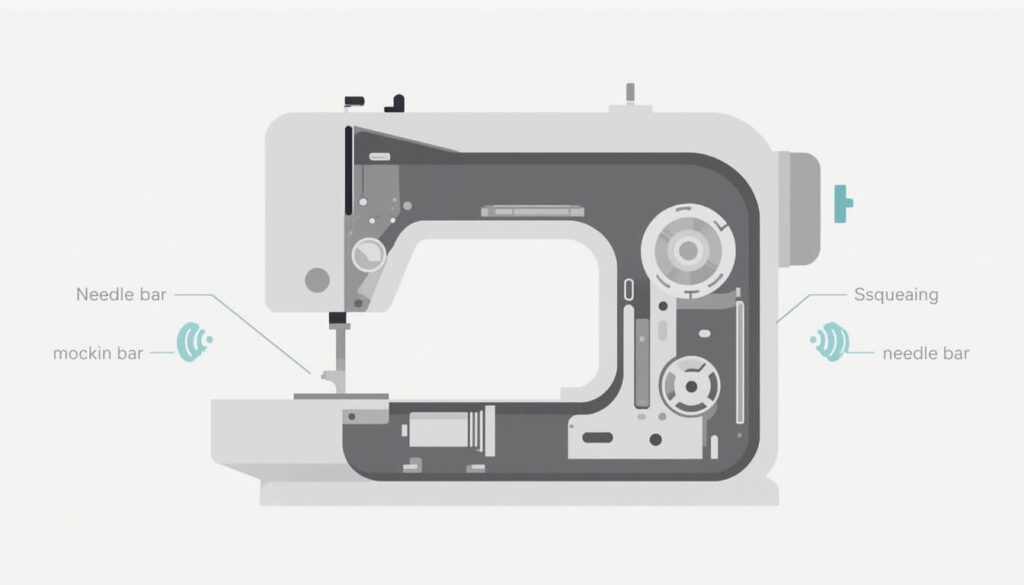
| Sound | Most Likely Cause |
|---|---|
| Grinding | Lint buildup, needs oiling |
| Knocking / Clunking | Bobbin winder engaged, bent needle, timing |
| Clicking | Wrong needle-thread combo, loose plate screw |
| Squeaking | Needs oil |
| Rattling / Buzzing | Loose screws, unstable surface |
| Humming / Whining (no stitching) | Belt or motor issue |
How to Fix a Noisy Sewing Machine
- Unplug the machine and remove the needle plate and bobbin case.
- Brush out lint around the hook race and feed dogs — avoid canned air, which can push lint deeper into the mechanism.
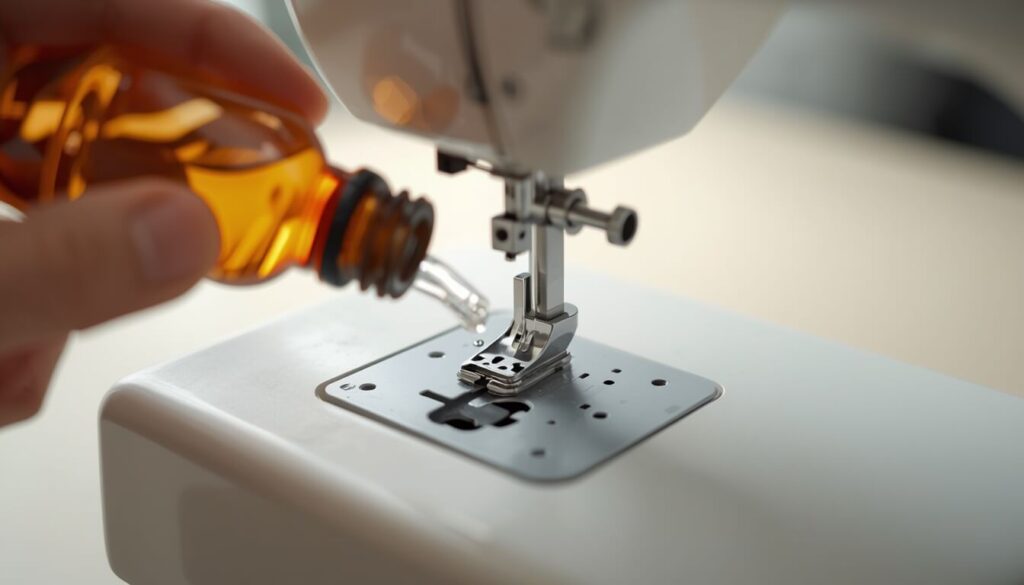
- Add one drop of sewing machine oil to the hook race area, following your manual’s oiling points.
- Check the needle plate screw and tighten it if it moves at all.
- Reset the bobbin winder by fully disengaging it, then turn the handwheel by hand to confirm it’s not partially engaged.
- Tighten visible panel screws gently — don’t overtighten plastic housing.
- Move the machine to a stable, flat surface and test again before assuming a mechanical fault.
- Turn the handwheel by hand for a few rotations after each step to check whether the noise is gone before plugging back in.
Quick Troubleshooting Checklist
- Bobbin area free of lint and dust
- Machine oiled at manufacturer’s recommended points
- Needle plate screw fully tight
- Bobbin winder fully disengaged after last use
- No loose panel or bracket screws
- Machine sitting on a stable, flat surface
- Needle straight and correctly inserted see our needle breaking guide if you suspect a bent needle
- No repeating knock at the same point in every stitch cycle (possible timing issue)
Helpful Tips to Keep Your Machine Running Quiet
Clean out lint after every project, not just when you notice a sound — a quick brush-out takes thirty seconds and prevents most grinding noises before they start. In most cases, oiling your machine every few months (or per your manual’s schedule) keeps moving parts quiet far longer than reacting to noise after it appears.
Common Mistakes That Make It Worse
Ignoring a knocking sound and continuing to sew is the biggest one a timing issue that starts as a faint knock can worsen into bent hooks or repeated needle breaks if it’s pushed through. Using the wrong oil, or too much of it, is another common mistake; excess oil attracts lint and can actually stain fabric on your next project.
When to Call a Sewing Machine Technician
If you’ve cleaned, oiled, and checked every screw and the knocking sound is still there especially a sharp, regular knock at the same point in each stitch that points to a timing issue that needs a professional. Attempting to adjust hook timing without the right tools can make the problem worse, so this is one repair best left to a technician.
FAQs
Conclusion
A noisy sewing machine is almost always trying to tell you something specific lint, dry parts, a loose screw, or a bobbin winder that didn’t fully disengage. Match the sound to the cause using the table above, work through the fixes in order, and in most cases your machine will be back to its normal quiet hum without a trip to the repair shop.
Getting your machine running smoothly again? Use the Fabric Yardage Calculator to plan your next project’s fabric needs before you start.