
If you’re asking why is my bobbin not working, it usually comes down to one of nine things: the winder isn’t engaged, the bobbin is in backwards, the case is dirty, the tension is off, or the needle simply isn’t catching the thread the way it should. Most of these are five-minute fixes once you know which one you’re dealing with.
- Quick Answer
- Bobbin Winder Won't Spin or Engage
- Bobbin Not Catching the Top Thread
- Bobbin Thread Tangling or Bunching Underneath
- Bobbin Thread Breaking
- Bobbin Inserted Backwards or in the Wrong Direction
- Wrong Bobbin Size or Class for Your Machine
- Bobbin Case Dirty or Packed with Lint
- Bobbin Tension Too Tight or Too Loose
- Bobbin Winding Unevenly
Quick Answer
A bobbin that won’t work is almost always caused by incorrect insertion, a dirty or lint-packed bobbin case, wrong tension, or a bobbin winder that hasn’t been engaged properly. Start by removing the bobbin, cleaning the case, and reinserting it the correct way before checking tension or needle position.
| Symptom | Likely Cause | Quick Fix |
|---|---|---|
| Bobbin winder spins but thread won’t wind | Winder not fully engaged | Push spindle to the winding position |
| Needle doesn’t pick up bobbin thread at all | Bobbin backwards or needle misaligned | Reinsert bobbin, check needle direction |
| Thread tangles or “nests” underneath fabric | Top thread not seated in tension discs | Rethread with presser foot up |
| Bobbin thread keeps breaking | Dirty case or bobbin tension too tight | Clean case, loosen tension slightly |
| Stitches loose or loopy on the underside | Bobbin tension too loose | Tighten bobbin tension screw slightly |
| Bobbin winds unevenly or lumpy | Thread not through winder tension disc | Rethread the winding path from the spool |
Why Is My Bobbin Not Working? Common Causes
Bobbin Winder Won’t Spin or Engage
One of the most common bobbin complaints has nothing to do with sewing at all it happens before you even start. If the bobbin winder spindle isn’t pushed fully into the winding position, the machine stays in sewing mode and the bobbin won’t turn.
Fix: Push the winding spindle firmly to the right (or left, depending on your machine) until it clicks into place, and make sure the presser foot is up before you begin winding.
Bobbin Not Catching the Top Thread
This is the problem that stops you from sewing altogether — you turn the hand wheel and no loop of bobbin thread appears. A quick way to check this is to turn the hand wheel slowly by hand while holding the top thread lightly; you should see a small loop pop up through the needle plate.
Common causes include a bent or backwards needle, incorrect threading, or a bobbin that isn’t seated the right way in its case.
Fix: Reinsert the needle with the flat side facing the back, rethread the top thread with the presser foot raised, and confirm the bobbin sits correctly with thread pulling in the right direction.
Bobbin Thread Tangling or Bunching Underneath
Many sewists overlook the top thread when this happens, but tangling and bunching underneath the fabric — sometimes called “bird nesting” — is almost always caused by the top thread, not the bobbin itself. If the top thread skipped a tension guide or was threaded with the presser foot down, it won’t hold proper tension, and the bobbin thread gets pulled up into a mess on the underside.
Fix: Raise the presser foot and rethread the top thread completely, making sure it passes through every guide and sits in the tension discs.
Bobbin Thread Breaking
If the top thread is fine but the bobbin thread keeps snapping, the cause is usually inside the bobbin case itself — a burr, trapped lint, or tension that’s set too tight.
Fix: Remove the bobbin case, brush out any lint, check for a bobbin tail that’s too short (aim for 2–3 inches when reinserting), and loosen the bobbin tension slightly if the thread feels stiff when you pull it.
Bobbin Inserted Backwards or in the Wrong Direction
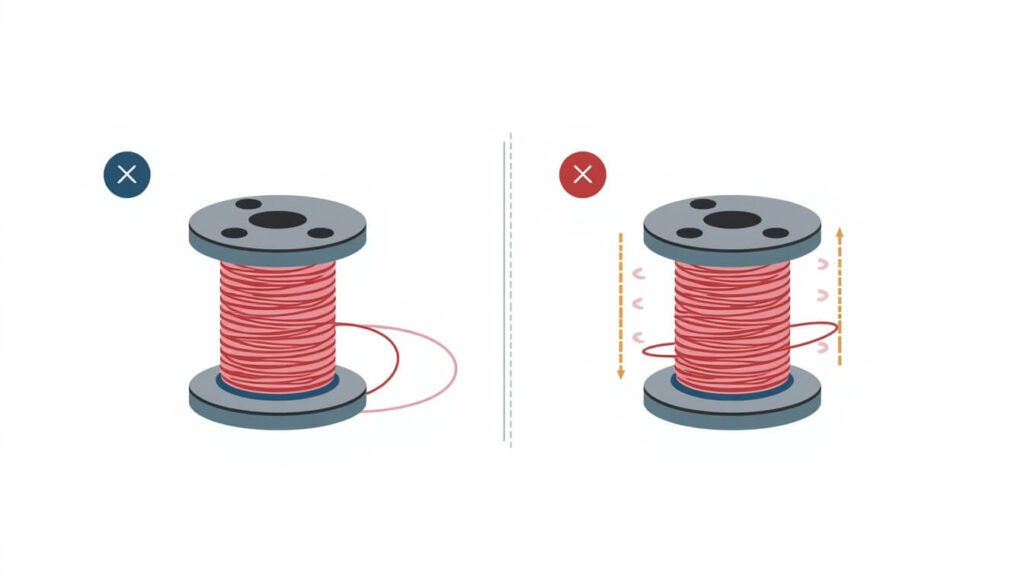
Before assuming your machine is broken, check the bobbin’s direction. Most machines require the bobbin to unwind counterclockwise, but this varies by brand and model — some Singer machines, for example, use a clockwise placement. A backwards bobbin will still spin, but it won’t feed thread correctly.
Fix: Remove the bobbin, check your machine’s manual for the correct direction, and reinsert it so the thread pulls off in that direction.
Wrong Bobbin Size or Class for Your Machine
Not every bobbin fits every machine, even when it looks close enough. Using the wrong class (Class 15 vs. Class 66, for example) can throw off tension and stop the bobbin from turning smoothly, even if it technically fits in the case.
Fix: Check your machine’s manual for the correct bobbin class, and stick to bobbins made for your specific brand and model rather than generic multi-packs.
Bobbin Case Dirty or Packed with Lint
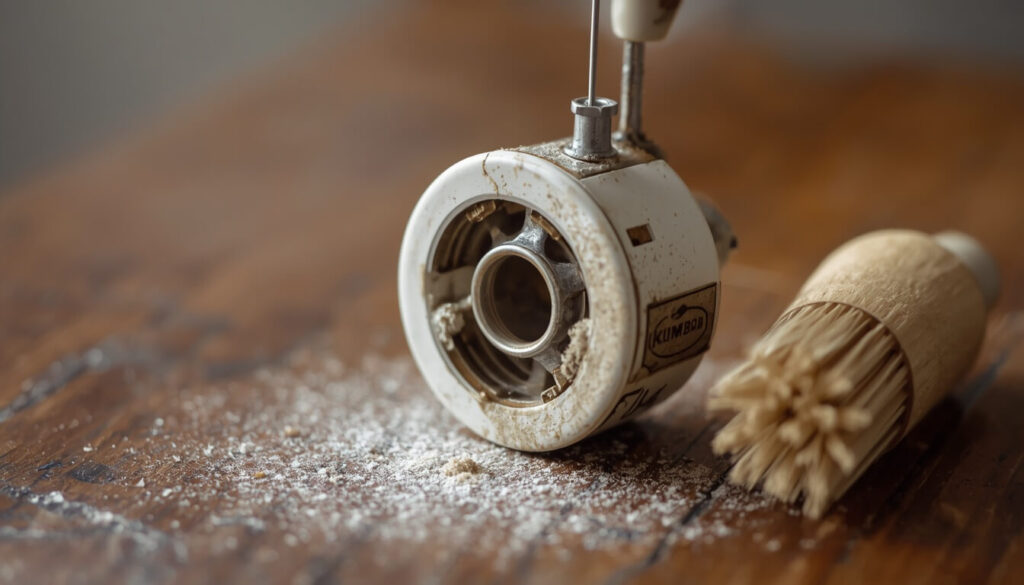
A simple way to think about this is: everything that runs through your machine eventually ends up as dust in the bobbin case. Over time, that buildup can jam the case, throw off tension, and stop the bobbin from spinning freely.
Fix: Remove the bobbin case and use a soft brush (not compressed air, which can push debris deeper in) to clear out lint and dust. Do this every 5–10 hours of sewing.
Bobbin Tension Too Tight or Too Loose
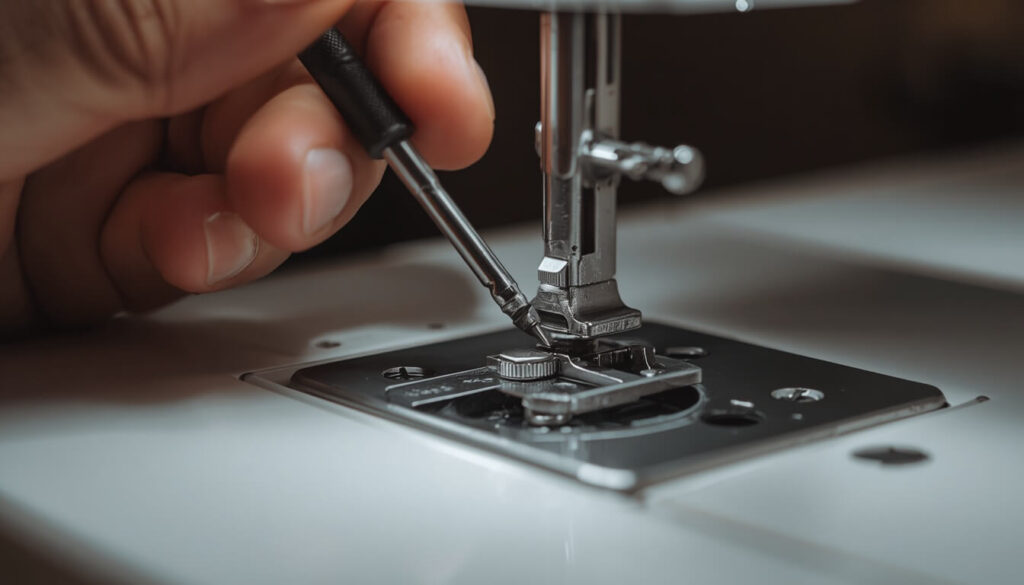
Bobbin tension problems show up differently depending on which way they’re off. Too tight, and the thread may break or the top thread will loop around the case. Too loose, and you’ll see loopy, uneven stitches on the underside of your fabric.
Fix: Adjust the small screw on the bobbin case in tiny increments — a quarter turn at a time — testing after each adjustment on scrap fabric.
Bobbin Winding Unevenly
If your wound bobbin looks lumpy or the thread sits unevenly across it, the problem usually happened during winding, not sewing. This is typically caused by the thread missing the winder’s tension disc, or the bobbin not being properly seated on the winding spindle.
Fix: Rethread the winding path from the spool through the tension disc, and avoid overfilling the bobbin — leave a small gap at the edge so it can spin freely.
How to Fix a Bobbin That’s Not Working (Step-by-Step)
If you’ve gone through the causes above and you’re still not sure why is my bobbin not working, this step-by-step order will catch the issue in almost every case:
- Remove the bobbin and case and check for visible lint, tangled thread, or damage.
- Clean the bobbin case with a soft brush, clearing dust from the hook area as well.
- Reinsert the bobbin in the correct direction for your machine, following the guide channel in the case.
- Rethread the top thread with the presser foot raised, making sure it seats in every guide and the tension discs.
- Turn the hand wheel by hand toward you and confirm a loop of bobbin thread appears through the needle plate.
- Sew a test line on scrap fabric and check both the top and underside of the stitching.
- Adjust tension in small increments if stitches look loose or tight on the underside, testing after each change.
Quick 30-Second Checklist
- Winder spindle fully engaged before winding
- Bobbin inserted in the correct direction
- Bobbin case cleaned of lint and dust
- Top thread rethreaded with presser foot up
- Correct bobbin class for your machine
If your bobbin still isn’t working after all five of these, the issue may be mechanical rather than something you can fix by hand.
When It’s a Timing Issue (and Needs a Technician)
Most bobbin problems come down to threading, cleaning, or tension — all things you can fix at home. It’s a different story if:
- The needle never catches the bobbin thread even after rethreading and cleaning
- You hear a grinding or tapping sound as the needle moves
- The problem started suddenly after sewing through something thick, like a pin or heavy layers
- Both thread breaking and skipped stitches are happening together
These patterns usually point to a timing issue — a mechanical misalignment between the needle and the rotating hook — which needs a trained technician to adjust rather than a home fix.
Common Mistakes to Avoid
- Skipping the cleaning step. Lint buildup is one of the most common — and most overlooked — causes of bobbin trouble.
- Assuming the bobbin is always the problem. Tangling and bunching are very often caused by the top thread, not the bobbin.
- Using generic or mismatched bobbins. The wrong class or size can cause tension problems that look like something more serious.
- Overwinding the bobbin. Filling it all the way to the edge can stop it from spinning freely inside the case.
- Adjusting bobbin tension in big turns. Small, quarter-turn adjustments are enough — testing after each one prevents overcorrecting.
FAQs
Conclusion
If you’ve been wondering why is my bobbin not working, the answer is almost always simpler than it feels in the moment. Clean the bobbin case, reinsert the bobbin correctly, and rethread the top thread first — that combination solves the majority of cases. The bobbin’s role in forming a lockstitch is to meet the top thread at a balanced point inside the fabric, which is why tension and insertion direction matter so much. If you’re also dealing with your thread breaking or the machine jamming, those issues often overlap with bobbin problems and are worth checking at the same time.
If your fabric usage is also part of your project planning, the SewSmartHub fabric yardage calculator can help you figure out exactly how much fabric you’ll need before your next project.