
A quilt batting size chart saves you from the most common batting mistake: buying a package that matches your quilt’s name but not its measurements. A “queen” batting package, for example, is the same size as a queen quilt, which means it’s too small once you add the extra margin every quilt needs.
This page gives you the standard package sizes, a table that matches each quilt size to the smallest package that fits, and a guide to buying batting by the yard. To pick your finished quilt size first, see our quilt size chart.
Table of Contents
Quick Answer
Here’s the quilt batting size chart in short. Standard batting packages are 45 × 60 inches for a crib, 72 × 90 for a twin, 81 × 96 for a full, 90 × 108 for a queen, and 120 × 120 for a king. Batting should be larger than your quilt top by about 4 inches on every side, which adds 8 inches to both the width and the length.
Because of that margin, you usually need the next package size up. A queen quilt, for example, needs king batting or a cut from a wide roll.
Standard Quilt Batting Size Chart
This table lists the common package sizes and the largest quilt top each one covers. The two right-hand columns assume either 2 or 4 inches of extra batting on every side.
| Package | Size (Inches) | Size (cm) | Largest Top (2 in per side) | Largest Top (4 in per side) |
|---|---|---|---|---|
| Crib | 45 × 60 | 114 × 152 | 41 × 56 | 37 × 52 |
| Throw | 60 × 60 | 152 × 152 | 56 × 56 | 52 × 52 |
| Twin | 72 × 90 | 183 × 229 | 68 × 86 | 64 × 82 |
| Full | 81 × 96 | 206 × 244 | 77 × 92 | 73 × 88 |
| Queen | 90 × 108 | 229 × 274 | 86 × 104 | 82 × 100 |
| King | 120 × 120 | 305 × 305 | 116 × 116 | 112 × 112 |
Brands vary slightly. Some full packages are 90 × 96, and some king packages are 120 × 122 or 120 × 124, so always check the label on the package you’re buying.
Quilt Batting Size Chart by Quilt Size
This quilt batting size chart matches each finished quilt from our quilt size chart to the smallest package that fits, with 4 inches of overhang on every side.
| Quilt | Finished Top | Batting Needed | Smallest Package |
|---|---|---|---|
| Crib | 36 × 52 | 44 × 60 | Crib (a tight fit) |
| Lap | 50 × 65 | 58 × 73 | Twin (cut down) |
| Large throw | 60 × 72 | 68 × 80 | Twin |
| Twin | 68 × 88 | 76 × 96 | Full |
| Twin XL | 68 × 93 | 76 × 101 | Queen |
| Full | 80 × 90 | 88 × 98 | Queen |
| Queen | 90 × 108 | 98 × 116 | King |
| King | 108 × 108 | 116 × 116 | King (a tight fit) |
| California king | 104 × 114 | 112 × 122 | None, so use a roll |
A smaller twin quilt of 60 × 80 inches needs 68 × 88, which a twin package covers. A California king quilt needs 122 inches of length, so a standard 120 × 120 king package comes up short.
If you only need part of a package, you can save the offcut. Batting scraps are handy for small projects like pot holders and table runners.
Why Queen Batting Doesn’t Fit a Queen Quilt
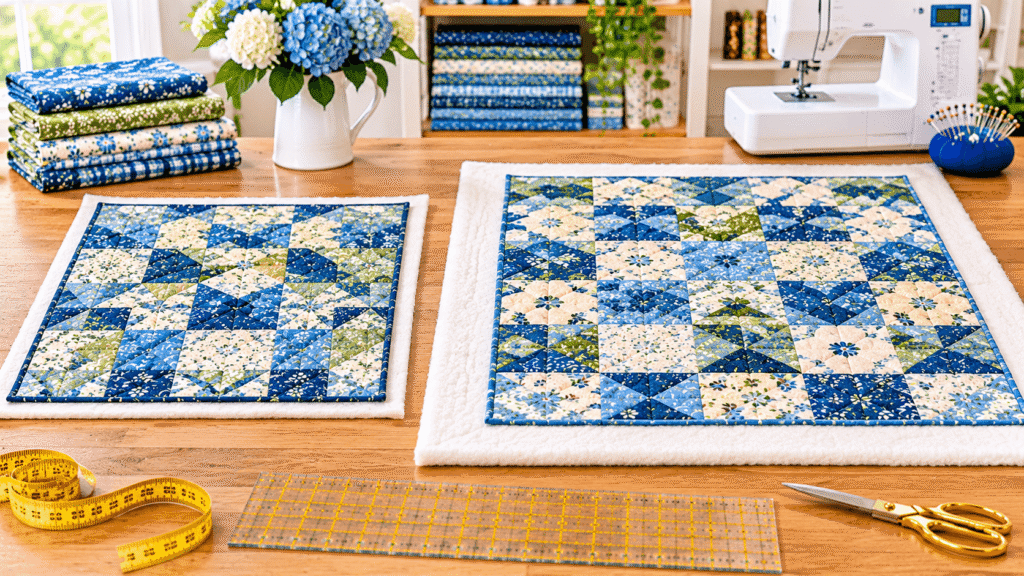
This surprises most beginners. A package labeled “queen” is 90 × 108 inches, and a finished queen quilt is also about 90 × 108 inches. If the batting is the same size as the quilt, there’s nothing left to hold or to cover the edges.
According to GetSashing, the package labels refer to approximate finished quilt sizes, not to the batting you actually need after you allow for overhang. With 4 inches of overhang per side, a queen package covers a top up to about 82 × 100 inches.
So a 90 × 108 quilt needs a 98 × 116 piece of batting. That’s larger than the queen package, so you buy king batting (120 × 120) or a length from a 120 inch roll.
Picture a quilter who buys queen batting for a queen quilt. When she lays the layers out, the batting stops short of the backing and top on two sides. Buying the next size up would have avoided the problem.
How Much Bigger Should Batting Be?
Batting needs extra on every side for three reasons. The layers draw in slightly as you quilt, you need something to grip while quilting, and you’ll trim the edges square afterward.
| Quilting Method | Overhang Per Side |
|---|---|
| Home machine, careful basting | 2 to 3 inches |
| Home machine, standard | 4 inches |
| Longarm | Often 4 to 6 inches or more |
Four inches per side is a safe choice for most home quilters, and it matches the extra we recommend for backing in our guide on how much backing fabric do I need for a quilt. Batting and backing should be about the same size.
If you quilt on a longarm, ask your quilter how much overhang they want before you buy. Many want more than 4 inches on each side.
Buying Batting by the Yard
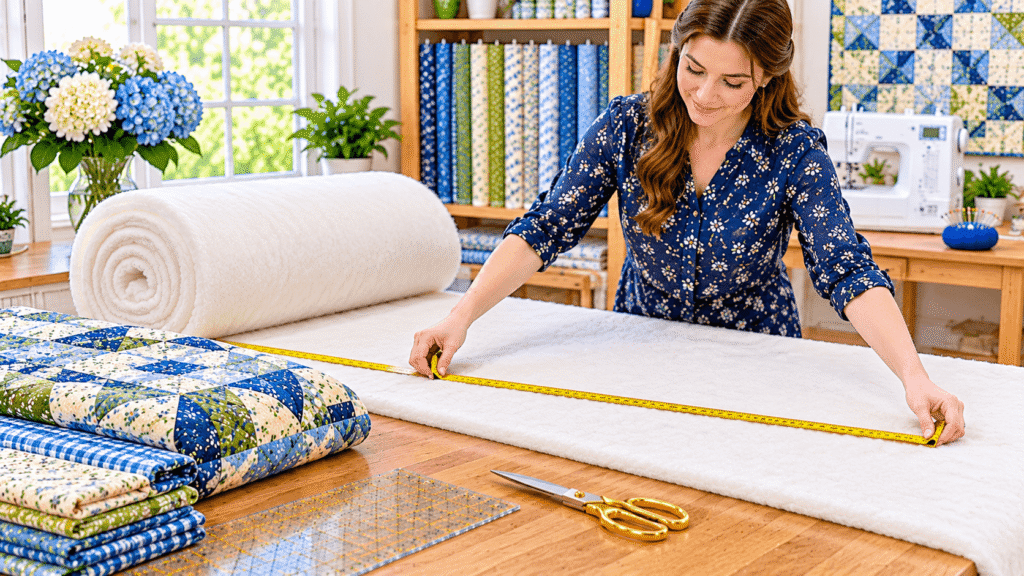
If the quilt batting size chart shows that no package fits, buy batting from a roll, sold by the yard. Roll widths vary by shop and brand, and 90, 96, and 120 inches are common, so check what your shop carries.
The method is simple. Work out the batting size you need, choose a roll at least as wide as one of the two dimensions, and cut the other dimension.
Yards = batting length ÷ 36
Run the narrower side along the roll’s length when the wider side fits across the roll’s width. That uses less batting.
| Quilt | Batting Needed | Roll Width | Cut Length | Buy |
|---|---|---|---|---|
| Lap, 50 × 65 | 58 × 73 | 90 inches | 58 inches | 1.75 yards |
| Twin, 68 × 88 | 76 × 96 | 90 inches | 96 inches | 2.75 yards |
| Queen, 90 × 108 | 98 × 116 | 120 inches | 98 inches | 2.75 yards |
For the lap quilt, the 73 inch side fits across a 90 inch roll, so you cut 58 inches of length, which is 1.6 yards, and buy 1.75. For the queen, the 116 inch side fits across a 120 inch roll, so you cut 98 inches, which is 2.7 yards, and buy 2.75.
Check the packaging if your batting has a stated direction, since some types have a preferred orientation.
Batting Types in Brief
The quilt batting size chart covers size, but the fiber affects how the quilt looks and feels. This table covers the common types.
| Type | What to Expect |
|---|---|
| Cotton | Low loft, flat and traditional, drapes well. According to FibreCalcs, it shrinks about 3 to 5 percent on the first wash, giving a slightly crinkled look |
| Polyester | Higher loft, doesn’t shrink |
| Wool | Warm without much weight |
| Cotton-polyester blend (80/20) | A popular all-rounder, and a good place for beginners to start |
Always follow the instructions on the package for washing and quilting distance.
Common Mistakes to Avoid
Most mistakes come from skipping the quilt batting size chart or misreading the package names.
- Buying a package that matches the quilt’s name, such as queen batting for a queen quilt
- Forgetting the overhang on every side
- Using a king package for a California king quilt without checking the length
- Ignoring brand variations in package sizes
- Cutting batting the same size as the backing with no margin to trim
- Not saving offcuts for smaller projects
- Buying batting before you’ve finished the quilt top and measured it
FAQs
What size batting do I need for a queen quilt?
A queen quilt of about 90 × 108 inches needs batting of roughly 98 × 116 with 4 inches of overhang per side. That’s larger than a queen package, so buy king batting (120 × 120) or about 2.75 yards from a 120 inch roll.
How much bigger should batting be than the quilt top?
Plan on about 4 inches extra on every side, which adds 8 inches to the width and the length. Careful home quilters sometimes use 2 or 3 inches, and longarm quilters often ask for 4 to 6 inches or more. Check with your quilter.
Does queen batting fit a queen quilt?
Usually not. A queen package is 90 × 108, the same size as a finished queen quilt, so there’s no overhang. With 4 inches per side, a queen package covers a top up to about 82 × 100 inches. Buy king batting instead.
What size batting do I need for a lap quilt?
A 50 × 65 inch lap quilt needs about 58 × 73 inches of batting. A twin package (72 × 90) covers it with room to spare, and you can save the offcuts. Alternatively, buy about 1.75 yards from a 90 inch roll.
What size batting do I need for a twin quilt?
A 68 × 88 inch twin quilt needs 76 × 96 inches, so a full package (81 × 96) fits. A smaller twin quilt of 60 × 80 inches needs 68 × 88, which a twin package (72 × 90) covers.
How many yards of batting do I need for a queen quilt?
Plan on about 2.75 yards from a 120 inch wide roll. A 90 × 108 inch queen quilt needs 98 × 116 inches of batting. The 116 inch side fits across the roll, so you cut 98 inches of length and buy 2.75 yards.
Does batting size change for longarm quilting?
Often, yes. Longarm quilters usually want more overhang than home quilters, commonly 4 to 6 inches per side or more, because the quilt is loaded onto a frame. Ask your longarm quilter for their exact requirements before you buy batting
Should I prewash batting?
It depends on the type, so follow the package instructions. Cotton batting can shrink about 3 to 5 percent on the first wash, which creates a slightly crinkled look many quilters like. Polyester batting doesn’t shrink. If you’re unsure, check the label.
Conclusion
Once you’ve used a quilt batting size chart, buying batting stops being a guess. Add 4 inches to every side of your quilt top, then pick the smallest package that covers it, or buy from a roll when the package falls short.
Remember that a package’s name describes a finished quilt, not the batting you need. For the rest of your quilt, see our guides on how much fabric for a quilt and how to quilt with a sewing machine.
Related articles