
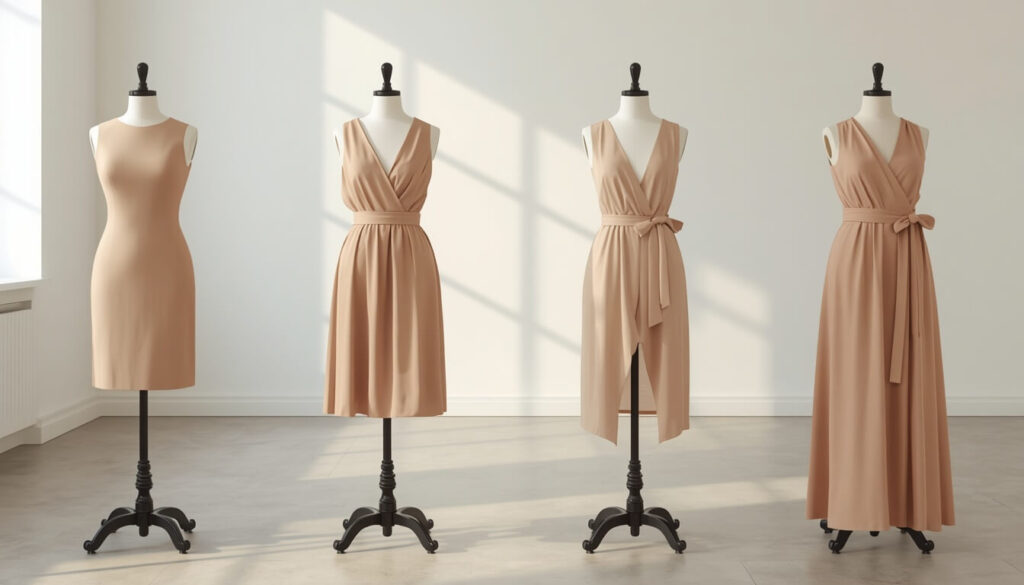
How much fabric for a dress depends more on silhouette than almost any other factor a fitted shift and a wrap dress cut from the same size chart can call for a full yard of difference. This guide breaks down yardage by dress style, the details that push your total higher, and a calculator to get an exact number once you know your style and fabric width.
Table of Contents
Quick Answer
Most dresses need between 2 and 4 yards of 44 to 45-inch fabric, depending on style. A simple shift or sheath dress typically needs the least, around 2 to 2.5 yards, while a wrap dress or a floor-length maxi can run 3.5 to 5 yards because of overlapping panels or extra length. Wider 60-inch fabric generally cuts that total by about a third.
How Much Fabric for a Dress by Style: Quick-Reference Table
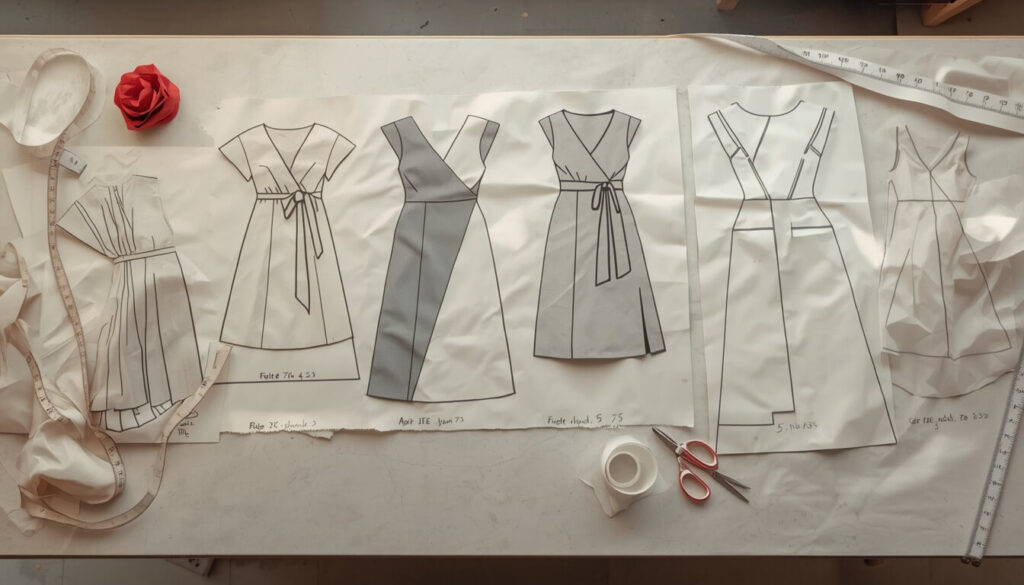
These figures assume standard adult sizing and no major style changes — treat them as a starting point rather than an exact number for your specific pattern.
| Dress Style | 44–45″ Fabric | 60″ Fabric |
|---|---|---|
| Shift / Sheath | 2 to 2.5 yards | 1.5 to 2 yards |
| A-Line | 2.5 to 3.5 yards | 2 to 2.5 yards |
| Wrap | 3 to 4 yards | 2.5 to 3 yards |
| Maxi (floor-length) | 3.5 to 5 yards | 2.5 to 3.5 yards |
| Wedding (A-line style) | 5 to 7 yards | 4 to 5.5 yards |
Shift & Sheath Dresses
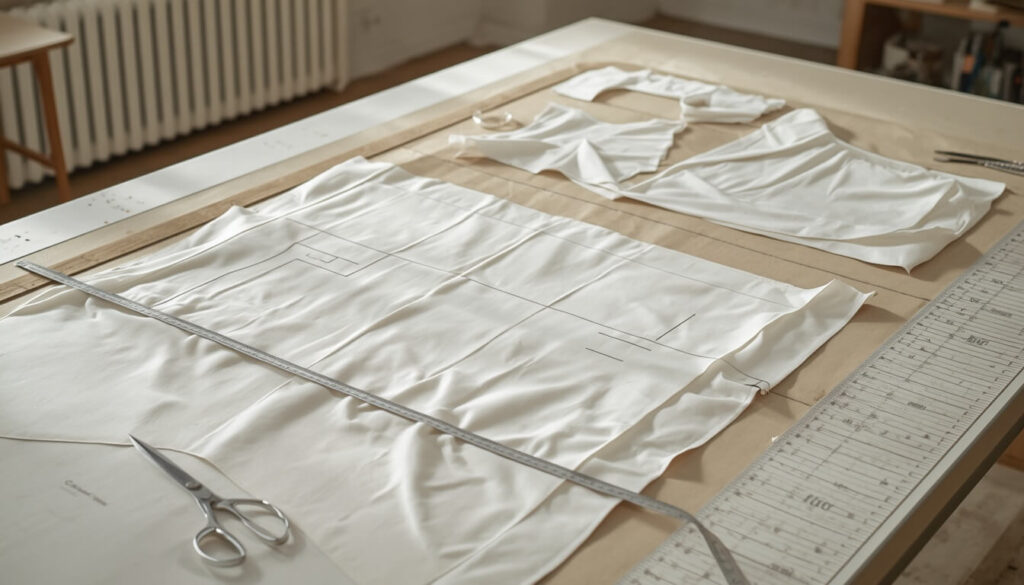
A shift or sheath dress follows the body’s silhouette closely with minimal flare, which makes it the most fabric-efficient dress style to sew. Most adult sizes need around 2 to 2.5 yards of 45-inch fabric, with sleeveless versions sitting at the lower end of that range and long sleeves pushing it slightly higher.
A-Line Dresses
The A-line’s gradual flare from waist to hem uses noticeably more fabric than a shift, since the skirt pieces are wider at the bottom. Plan for 2.5 to 3.5 yards on standard-width fabric, with a fuller flare or a longer hemline landing you toward the higher end.
Wrap Dresses
According to Wikipedia, a wrap dress is defined by a front closure formed by one side of the fabric wrapping across the other, a construction style with roots in wrap-style garments worn across Asia long before it became a Western wardrobe staple.
That overlapping front panel is exactly why wrap dresses need more fabric than their silhouette might suggest — you’re essentially cutting extra width into the bodice and skirt so the front can cross over and still tie closed. Budget 3 to 4 yards on standard-width fabric, with self-fabric ties adding a bit more on top of that.
Maxi Dresses
Length is the main driver here, not silhouette complexity. A floor-length maxi in 44 to 45-inch fabric typically needs 3.5 to 5 yards, and a fuller skirt or added tiers can push that even higher. Taller sewists should budget toward the top of the range, since maxi patterns are usually drafted for a specific height and shorter or taller frames shift the total.
Special Occasion & Wedding Dresses
Formal and wedding dresses carry the widest range of any dress style, since ball gown skirts, trains, and layered underskirts all add significant yardage on top of the main fabric. An A-line wedding dress typically runs 5 to 7 yards of the main fabric alone, before accounting for lining, underlining, or a separate lining fabric that’s often purchased and calculated on top.
Factors That Change Your Total
Fabric Width
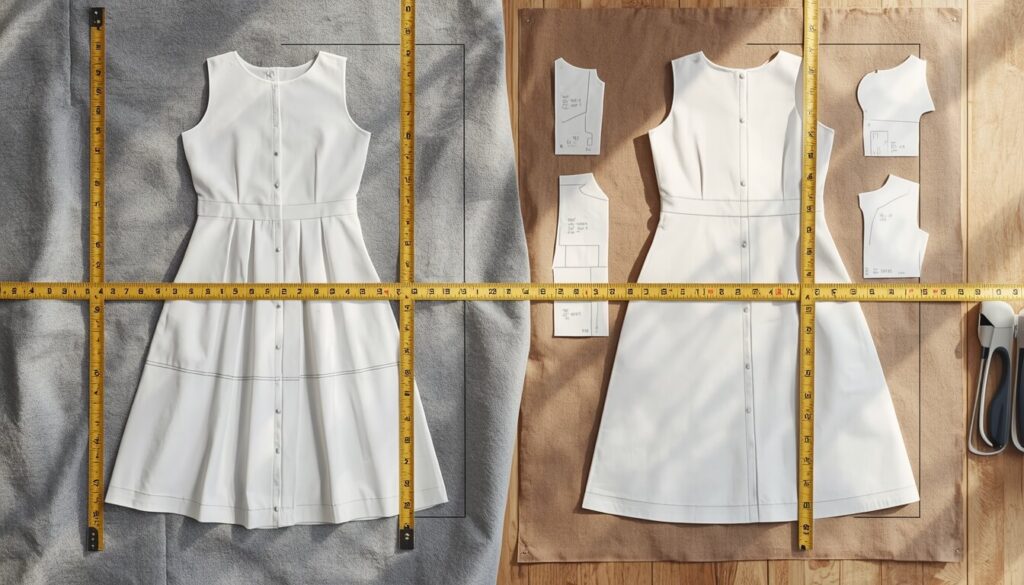
Wider fabric fits more pattern pieces per row, which lowers your total yardage. The table above shows roughly a one-third reduction moving from 45-inch to 60-inch fabric, though the exact savings depends on how your particular pattern’s pieces fit together.
Your Height and Size
Taller sewists need extra length in the skirt and bodice pieces, and larger sizes need more fabric width per piece — both push your total above the baseline figures in the table. As a rough guide, add a quarter to a half yard for every few sizes above the smallest size on a multi-size pattern.
Sleeves, Lining, and Added Details
Long sleeves, a fully lined bodice or skirt, ruffles, or a separate underskirt all add to your main fabric total, and lining is often calculated and purchased separately rather than out of the same yardage. Check your specific pattern’s notions and lining requirements before finalizing your fabric order.
Directional Prints and Pattern Matching
A one-directional print or a plaid that needs matching at the seams reduces how efficiently pieces fit across the fabric, which can add 15 to 25% to your total depending on the size of the repeat. Our pillar guide on how much fabric do I need covers this factor in more detail if you’re working with a patterned fabric.
Calculate Your Exact Yardage
These ranges are a solid starting point, but your pattern’s specific pieces, your exact size, and your fabric’s width all shift the final number. The SewSmartHub fabric yardage calculator takes those specifics and returns an exact yardage to buy, rounded up and ready to take to the fabric store.
Common Mistakes to Avoid
- Using a shift dress’s yardage as a baseline for a wrap or maxi style, without accounting for the extra fabric those styles need
- Forgetting that lining is usually calculated separately from your main fabric yardage
- Not adding extra for a directional print or plaid that needs pattern matching
- Buying the exact minimum for your size instead of rounding up for cutting mistakes
- Assuming a pattern’s printed yardage already accounts for your height, when many patterns are drafted for a single standard height
FAQs
How much fabric do I need for a wrap dress?
Most wrap dresses need 3 to 4 yards of 44 to 45-inch fabric, more than a shift or A-line dress of similar length, because the front panel has to overlap enough to wrap and tie closed.
How much fabric do I need for a maxi dress?
A floor-length maxi typically needs 3.5 to 5 yards on standard-width fabric, with the length of the skirt being the biggest factor rather than the silhouette itself. Taller sewists should plan toward the higher end of that range.
Does a lined dress need extra fabric?
Yes, and lining is usually calculated and purchased separately from your main fabric rather than included in the yardage figures above. Check your pattern’s fabric requirements section for a separate lining yardage.
How much extra fabric do I need for a plus-size dress?
As a rough guide, add a quarter to a half yard for every few sizes above the smallest size on a multi-size pattern, since larger pieces need more fabric width even when the overall style stays the same.
Does fabric width change how much I need for a dress?
Yes, significantly. Moving from 45-inch to 60-inch fabric typically reduces your total yardage by about a third, since wider fabric fits more pattern pieces across each row.
Conclusion
Once you know roughly how much fabric a dress style needs, shopping for a project stops being a guessing game a shift dress and a wrap dress drafted from a similar base pattern can differ by a full yard or more, and knowing that up front saves an extra trip back to the fabric store. For your exact number based on your specific pattern and fabric width, run the details through the SewSmartHub fabric yardage calculator.
If you’re also working on the hem once your dress is sewn, our guide on how to hem a dress with a sewing machine covers that finishing step in full.