
How much fabric do I need is usually the first question that stalls a project before it even starts, and the honest answer is that it comes down to one repeatable formula: measure your pieces, check your fabric width, work out how many fit per row, then convert the total to yards and round up. This guide walks through that formula step by step, the factors that change the result, and where to go next for project-specific numbers.
Table of Contents
Quick Answer
To figure out how much fabric you need, measure the length and width of each piece you’re cutting, check how many fit across your fabric’s width, multiply by the number of rows that requires, then divide the total length by 36 inches to get yards. Round up to the next quarter yard, and add 10 to 15% for cutting waste, pattern matching, or shrinkage.
The Basic Fabric Yardage Formula
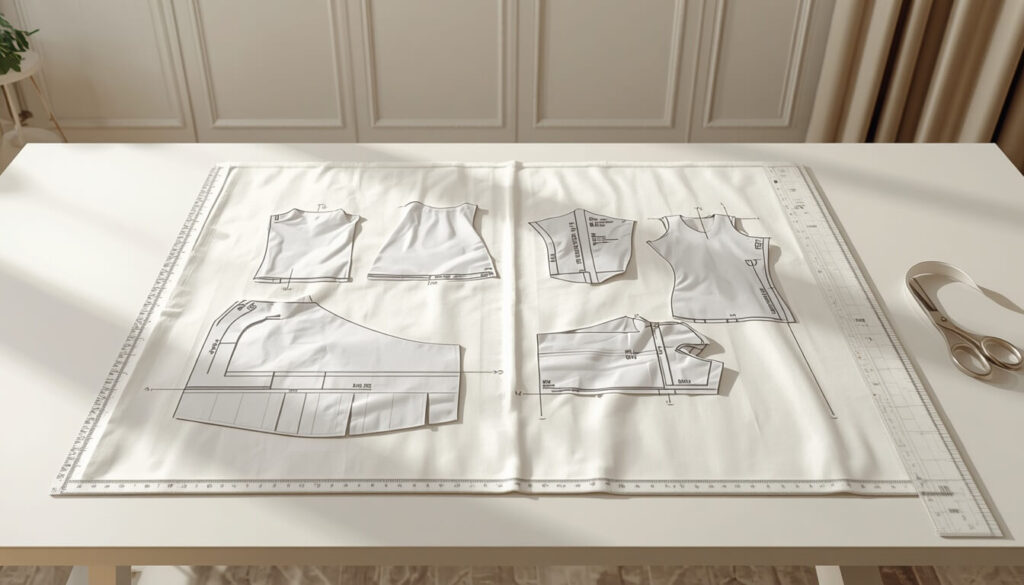
This formula works whether you’re cutting a garment, a set of quilt blocks, or simple home decor pieces — the math stays the same, only the piece count changes.
Step 1 — Measure Your Pieces
Write down the length and width of every piece you plan to cut, including seam allowances. If you’re not confident measuring accurately yet, our fabric measurement guide walks through the basics of taking clean, consistent measurements before you start.
Step 2 — Check Your Fabric Width
Fabric comes in a handful of standard widths, most commonly 45 inches for quilting cotton and 54 to 60 inches for home decor and knit fabric. This number determines how many pieces you can fit side by side. Our fabric width guide covers the full range of common widths and what each is typically used for.
Step 3 — Calculate Pieces Per Row and Total Rows
Divide your fabric’s width by the width of one piece, and round down to a whole number — that’s how many pieces fit in a single row. Divide your total number of pieces needed by that number to find how many rows you’ll need.
Step 4 — Convert to Yards (and Round Up)
Multiply your number of rows by the length of one piece to get your total length in inches. Divide that by 36 to convert to yards, and round up to the next quarter or half yard rather than down — fabric stores don’t sell partial inches, and you don’t want to come up short.
Using a Premade Pattern vs. Drafting Your Own
If you’re sewing from a commercial pattern, most of this work is already done for you. The pattern envelope lists exact yardage for a few standard fabric widths, so a good rule of thumb is simply to add half a yard on top of that number to cover shrinkage or a measuring error.
If you’re drafting your own pattern, or adapting one significantly, you’ll need to run the formula above yourself, since there’s no printed yardage to fall back on.
Factors That Increase How Much Fabric You Need
Pattern Repeats and Directional Prints
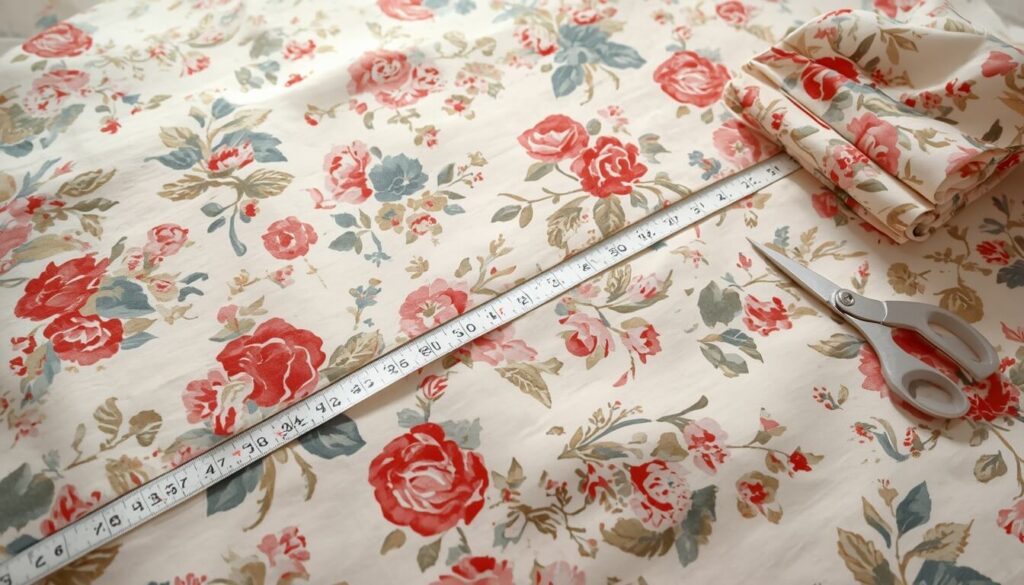
A repeating print needs extra fabric so the design lines up at the seams, and a one-directional print — anything with an obvious up and down, like a floral border or a nap fabric such as velvet — means every piece has to face the same way. Both of these reduce how many pieces fit per row, which raises your total yardage.
Shrinkage and Pre-Washing
Natural fibers like cotton and linen can shrink 5 to 10% on their first wash. If you plan to pre-wash your fabric, which is generally a good idea before cutting, build that percentage into your total so the finished project still matches your original measurements.
Ease, Fit, and Making a Mock-Up First
The amount of “ease” you want — extra room built into a garment for comfort or a looser silhouette — changes your piece sizes before you even get to the yardage formula. A fitted style needs less fabric than an oversized one cut from the same base pattern. If you’re trying a pattern for the first time, doubling your yardage to cut a quick mock-up, sometimes called a muslin, is worth the extra fabric — it catches fit problems before they show up in your good fabric.
What If Your Fabric Width Isn’t Listed on the Pattern?
Most commercial patterns only print yardage for 45-inch and 60-inch fabric, but plenty of fabric doesn’t come in either width. Wovens often run 42 to 44 inches, knits closer to 57 to 60 inches, and quilting or home decor fabric can go as wide as 90 to 110 inches.
If your fabric’s width falls outside the printed options, the safest approach is to base your calculation on the closest listed width and adjust proportionally from there. Our fabric conversion chart covers the full method for converting between widths so you’re not guessing.
Yards vs. Meters (International Patterns)
Fabric yardage worldwide is measured in two different units depending on where a pattern was published. According to Wikipedia, one yard has been standardized internationally as exactly 0.9144 meters since 1959, which makes a meter slightly longer than a yard.
That difference matters more than it sounds. If a European pattern calls for 2 meters and you buy 2 yards instead, you’ll come up roughly 8 inches short. As a rule of thumb, add about 10% to a metric yardage figure if you’re buying in yards, and round up rather than down.
Quick-Reference: How Much Fabric for Common Projects
These numbers are rough starting points based on standard 45-inch fabric — the projects below all have their own detailed guides if you want exact figures for your size and style.
| Project | Approximate Yardage |
|---|---|
| Simple skirt or shorts | 1 to 1.5 yards |
| Blouse or shirt | 1.5 to 2 yards |
| Dress | 2 to 3.5 yards |
| Pants | 2 to 2.5 yards |
| Baby quilt top | 2 to 3 yards |
| Twin quilt top | 5 to 6 yards |
| Curtain panel (per window) | 2 to 4 yards |
Dresses & Garments
Garment yardage swings the most based on style, sleeve length, and skirt fullness. Our guide on how much fabric for a dress breaks it down by style so you can get a more precise number.
Quilts
Quilt yardage depends heavily on the finished size and whether you’re calculating the top only or including backing and binding. Larger quilts scale up fast — a king-size top alone can run 8 to 9 yards.
Curtains
Curtain yardage depends on your window width, how much fullness you want in the gathers, and your fabric’s width. Our guide on how much fabric for curtains walks through that calculation in detail.
Skip the Math — Use the Fabric Yardage Calculator
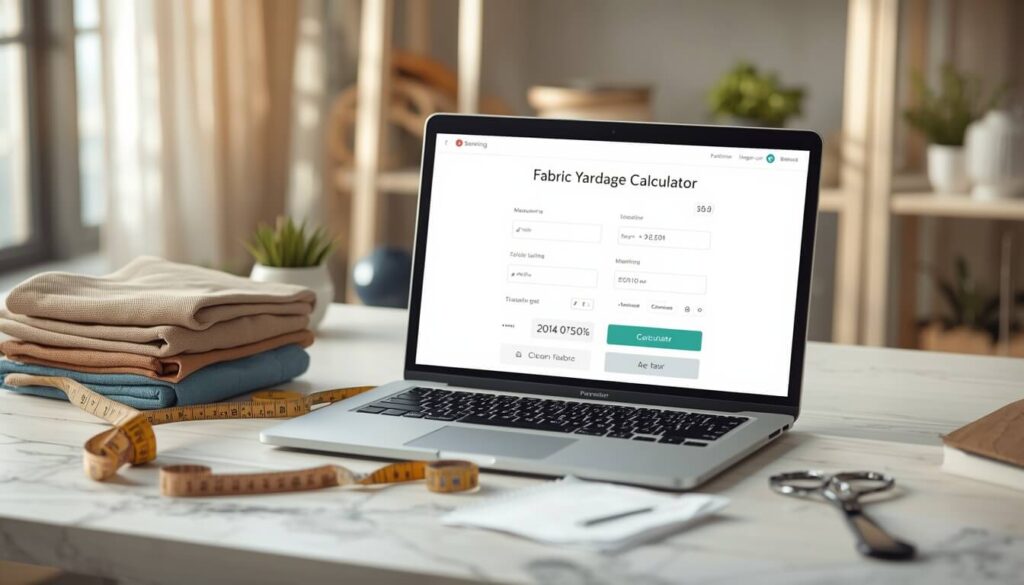
If you’d rather not run these numbers by hand, the SewSmartHub fabric yardage calculator does the same formula for you. Enter your piece dimensions, how many you need, and your fabric width, and it returns the yardage to buy — rounded up and ready to take to the store.
Common Mistakes to Avoid
- Rounding down instead of up when converting to yards
- Forgetting to account for a directional print or pattern repeat
- Skipping the shrinkage allowance on natural fiber fabric you plan to pre-wash
- Mixing up yards and meters on an international pattern
- Buying the exact calculated amount with no allowance for cutting mistakes
FAQ
How much extra fabric should I buy beyond my calculation?
A buffer of 10 to 15% is standard for most projects, covering cutting mistakes, pattern matching, and minor measuring errors. For directional prints or large pattern repeats, closer to 20% is safer.
How much fabric do I need for a dress?
It depends heavily on style, sleeve length, and skirt fullness, generally ranging from 2 to 3.5 yards on standard-width fabric. Our dedicated guide on how much fabric for a dress covers specific styles in more detail.
Do I need extra fabric if my print has a pattern repeat?
Yes. A pattern repeat means each cut piece has to align with the same point in the design, which reduces how efficiently pieces fit across the fabric width. Add 15 to 25% depending on how large the repeat is.
What’s the difference between fabric yardage in yards and meters?
A meter is roughly 10% longer than a yard, since one yard equals exactly 0.9144 meters. If you’re converting a metric pattern to yards, add about 10% to avoid coming up short.
How do I calculate fabric yardage if my fabric width isn’t 45 or 60 inches?
Base your calculation on whichever standard width is closest, then adjust proportionally for the actual width of your fabric. Our fabric conversion chart walks through this calculation for widths outside the usual range.
Conclusion
Once you know how much fabric you need using this formula, buying fabric stops being a guessing game and becomes a quick calculation you can run for any project. The core steps measure, check your width, calculate rows, convert to yards stay the same whether you’re sewing a simple skirt or a queen-size quilt top. For project-specific numbers, the dedicated guides linked throughout this article go into more depth than a general formula can.
If you’d rather skip the math entirely, the SewSmartHub fabric yardage calculator runs the same formula for you in seconds.