

What is a walking foot? It’s a special presser foot with its own set of feed teeth, built to move the top layer of fabric through your machine at the same speed as the bottom layer. That small difference stops layers from shifting, stretching, or puckering as you sew.
You’ll hear it called an even feed foot or a dual feed foot too. This guide explains how it works, what it’s used for, how it compares with a regular presser foot, and how to tell whether your machine can use one. For the step-by-step of attaching and sewing with it, see our upcoming guide on how to use a walking foot.
Table of Contents
Quick Answer
What is a walking foot, in short? It’s a presser foot attachment that feeds fabric from the top while your machine’s feed dogs feed it from the bottom. Both layers move together, so thick, slippery, or stretchy fabric doesn’t shift or pucker.
It’s most useful for machine quilting, bulky layers, knits, slippery fabric, and matching stripes. For simple seams on one or two layers of stable cotton, a regular presser foot works fine.
What Is a Walking Foot on a Sewing Machine?
A walking foot replaces your regular presser foot. According to Wikipedia, it’s used for quilting and bag making, and it’s good for materials with varying layers because it can climb up and down them easily.
It looks bulkier than a standard foot. On the underside, it has small serrated teeth. Behind the foot sits a lever arm that clamps onto your needle bar, which is what makes the teeth move.
The name comes from the way the foot seems to step forward as it sews. Many sewists call it an even feed foot, since it feeds the layers evenly.
How a Walking Foot Works
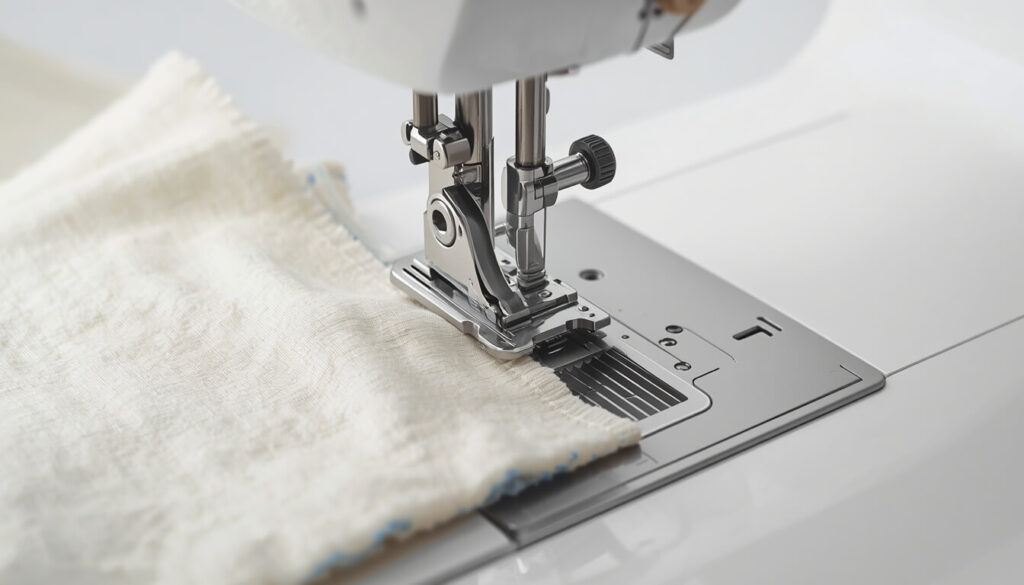
So what is a walking foot actually doing as it sews? To understand, start with how fabric moves normally.
Your machine has feed dogs, the small toothed bars under the needle plate. They move back and forth to pull the fabric through. A regular presser foot only presses down on the fabric. As Wikipedia’s page on the presser foot puts it, it helps the feed dogs passively and adds no forward force of its own.
That works for one or two layers of stable fabric. With thick or slippery layers, the feed dogs pull the bottom layer forward while the top layer drags behind. The layers creep apart, and you get puckers and uneven seams.
A walking foot fixes this. Its own teeth grip the top layer and move it forward in sync with the feed dogs below. Both layers travel at the same pace.
Take two layers of satin sewn with a regular foot. The bottom layer slides forward and the top one lags, so the ends don’t match. With a walking foot, both layers arrive together.
What Is a Walking Foot Used For?

A walking foot helps whenever layers want to move at different speeds. This table shows the most common uses.
| Use | Why a Walking Foot Helps |
|---|---|
| Machine quilting | Feeds the top, batting, and backing together, preventing shifting and puckers |
| Multiple bulky layers | Moves thick stacks, like bag making, evenly through the machine |
| Slippery fabric (satin, silk, lining) | Stops the top layer sliding away from the bottom |
| Knits and stretch fabric | Stops the top layer stretching while the bottom feeds normally |
| Vinyl, leather, and sticky fabric | Keeps the top layer moving instead of dragging on the foot |
| Matching stripes and plaids | Feeds both layers evenly so the pattern lines up |
| Quilt binding | Keeps the binding and quilt layers from creeping apart |
Quilting is the biggest use. If you want to see it in action, our guide on how to machine quilt a quilt uses a walking foot for straight lines and stitch in the ditch. The same foot helps with how to bind a quilt with a sewing machine.
Walking Foot vs. Regular Presser Foot
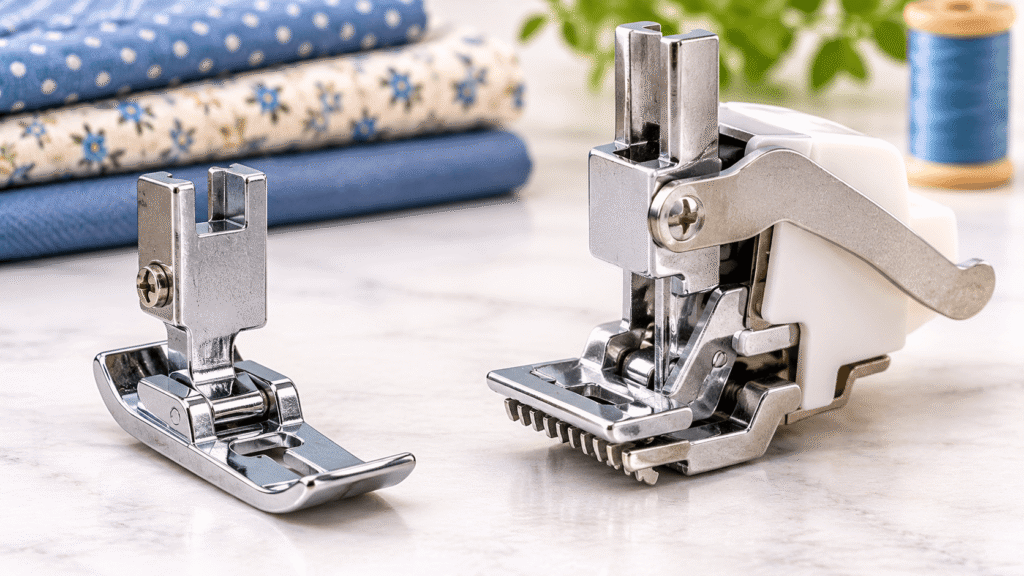
Both feet have a place. This table shows where each one is the better choice.
| Feature | Regular Presser Foot | Walking Foot |
|---|---|---|
| How it feeds | Presses down; feed dogs do the pulling | Feeds the top layer while feed dogs feed the bottom |
| Best for | One or two stable layers | Thick, slippery, or stretchy layers |
| Tight curves and turns | Easy | Harder, since the foot is bulkier |
| Visibility | Clear view of the needle area | Bulkier, so slightly less visible |
| Speed | Normal speed | Slower speed gives better results |
| Availability | Comes with every machine | Often sold separately, or built in on some models |
For basic seams, zippers, and lightweight woven fabric, a regular foot is the better choice. Keep the walking foot for jobs that need it.
Do You Need a Walking Foot?
You probably need one if you do any of these:
- Quilt on a home machine
- Sew knits that ripple or stretch as you sew
- Sew slippery fabric that slides apart
- Make bags, or sew through several thick layers
- Sew vinyl or leather that sticks to the foot
- Match stripes or plaids across seams
You can skip it if you only sew simple garments or crafts with one or two layers of stable cotton.
Here’s a real example. A quilter machine-quilts a throw with a regular foot, and the backing puckers in long folds across the quilt. Switching to a walking foot usually fixes it, because the three layers stop shifting.
Types of Walking Feet
What is a walking foot when you go to buy one? There are three kinds, and the difference matters when you shop.
Add-on walking foot. This is the most common type. It’s an attachment that replaces your regular foot, and it’s sold separately. Because almost all household machines use a standard presser foot connector, add-on feet are widely available.
Built-in dual feed. Some machines have the walking foot built in. According to Pin Cut Sew Studio, some Pfaff, Bernina, and Janome machines have one that looks like a shoe-shaped lever tucked behind the presser foot, which you pull down into place. If yours has it, you don’t need to buy an attachment.
Industrial walking foot machine. Heavy-duty industrial machines are built with a strong feed system from the start. This is a different kind of machine, not an accessory for home use.
Marketing can be confusing here. Check your manual to see what feed system your machine actually uses.
Will a Walking Foot Fit Your Machine?
Compatibility is the most common problem. A walking foot has to match your machine’s shank, the part that holds the foot.
According to Wikipedia’s page on the presser foot, there are three main types:
- Low shank: about 0.5 inches (13 mm) from the bottom of the foot to the center of the thumbscrew
- High shank: about 1 inch (25 mm) in the same measurement
- Slant shank: a foot that’s distinctly slanted, made for machines built that way
Low and high shank feet aren’t interchangeable. Most modern home machines are low shank, but check yours before you buy.
A short checklist helps:
- Find your machine’s shank type in the manual or on the maker’s website.
- Check whether your brand uses its own snap-on system.
- Buy a walking foot made for your shank type or your model.
- If your machine has built-in dual feed, you may not need one.
If you’re new to your machine’s parts, our guide on how does a sewing machine work explains the basics, including the feed dogs.
Limits of a Walking Foot
What is a walking foot not good for? It isn’t right for every job.
- No free-motion quilting. Free-motion needs the feed dogs lowered, and the walking foot depends on them.
- Harder tight turns. The bulkier foot is awkward around sharp curves and details.
- Reverse stitching. Many makers advise against long reverse stitching with a walking foot, so check your manual.
- Slower sewing. A steady, moderate speed feeds the layers best.
- Not a fix for everything. A walking foot won’t fix a dull needle or bad tension.
Common Mistakes to Avoid
- Buying a foot with the wrong shank type
- Leaving the walking foot on for every project, including those that don’t need it
- Trying to use it for free-motion quilting
- Sewing too fast, which makes the feed uneven
- Expecting it to fix problems caused by the needle or tension
- Skipping a test seam on the fabric you’re sewing
FAQs
What is a walking foot?
A walking foot is a presser foot attachment with its own set of feed teeth. It grips the top layer and moves it forward in sync with the feed dogs below, so multiple layers travel together without shifting, stretching, or puckering. It’s also called an even feed or dual feed foot.
What does a walking foot do?
It feeds fabric from the top while the feed dogs feed it from the bottom. That keeps layers moving at the same speed. It helps with quilting, thick layers, slippery fabric, knits, vinyl, and matching stripes, where a regular foot lets the layers drift apart.
Do I need a walking foot for quilting?
It’s strongly recommended for straight-line quilting and stitch in the ditch. A walking foot feeds the quilt top, batting, and backing together, which prevents shifting and puckers. You can quilt without one, especially free-motion, but straight lines are much harder to keep even.
What is the difference between a walking foot and a regular presser foot?
A regular presser foot presses down and the feed dogs do the pulling. A walking foot adds feed teeth on top that move the upper layer in sync with the bottom. The walking foot is bulkier and better for thick layers, while the regular foot suits simple seams.
Does every sewing machine have a walking foot?
No. Most home machines use a regular foot, and the walking foot is sold separately as an add-on. Some models, including certain Pfaff, Bernina, and Janome machines, have a built-in dual feed. Always check your shank type before buying a separate walking foot.
Can I use a walking foot for free-motion quilting?
No. Free-motion quilting needs the feed dogs lowered or covered so you can move the quilt in any direction. A walking foot depends on the feed dogs working, so use a darning or free-motion foot for freehand designs instead. Walking feet are for straight-line work.
Can you sew regular seams with a walking foot?
Yes, you can sew regular seams with one, and it works well. It’s bulkier than a standard foot, though, and slower to guide around curves. Most sewists keep it for thick, slippery, or stretchy fabric and use a regular foot for everyday seams.
Is a walking foot worth it?
For quilters, and anyone who sews knits, slippery fabric, or thick layers, it’s one of the most useful accessories you can buy. If you only sew simple projects with one or two stable layers, you may never need one. Check your shank type before you buy.
Conclusion
So, what is a walking foot? It’s a second set of feed teeth on top of your fabric, working with the feed dogs below so every layer moves together. That’s why it solves puckers, shifting layers, and rippling knits.
Check your shank type before you buy, keep it for the jobs that need it, and use a regular foot for the rest. For quilting, see how to put it to work in our pillar guide on how to quilt with a sewing machine. New to your machine? Start with how to use a sewing machine.
Related articles